The problem with intellectual fashion is that you can fall out of it so easily. For Maggie Nelson—whose much-praised 2015 memoir The Argonauts captured a particular flavor of highly personal/political writing in the mid-2010s—such shifts must be disorienting. In The Argonauts, Nelson wrote in detail about her relationship with a gender-nonconforming partner at a time when the topic was relatively unexplored in literary nonfiction.* The book also recounted Nelson’s struggles to conceive a child using artificial insemination and the birth of her son at a time when highbrow books about writers reconciling art with motherhood—Jenny Offill’s Dept. of Speculation, Rachel Cusk’s Transit—were the rage.* Nelson was frank, idealistic, and decidedly earnest, a trait she shared with, say, Lin-Manuel Miranda, a figure adulated during the same period who suddenly and drastically became cringe as the Obama years lurched into the Trump era.
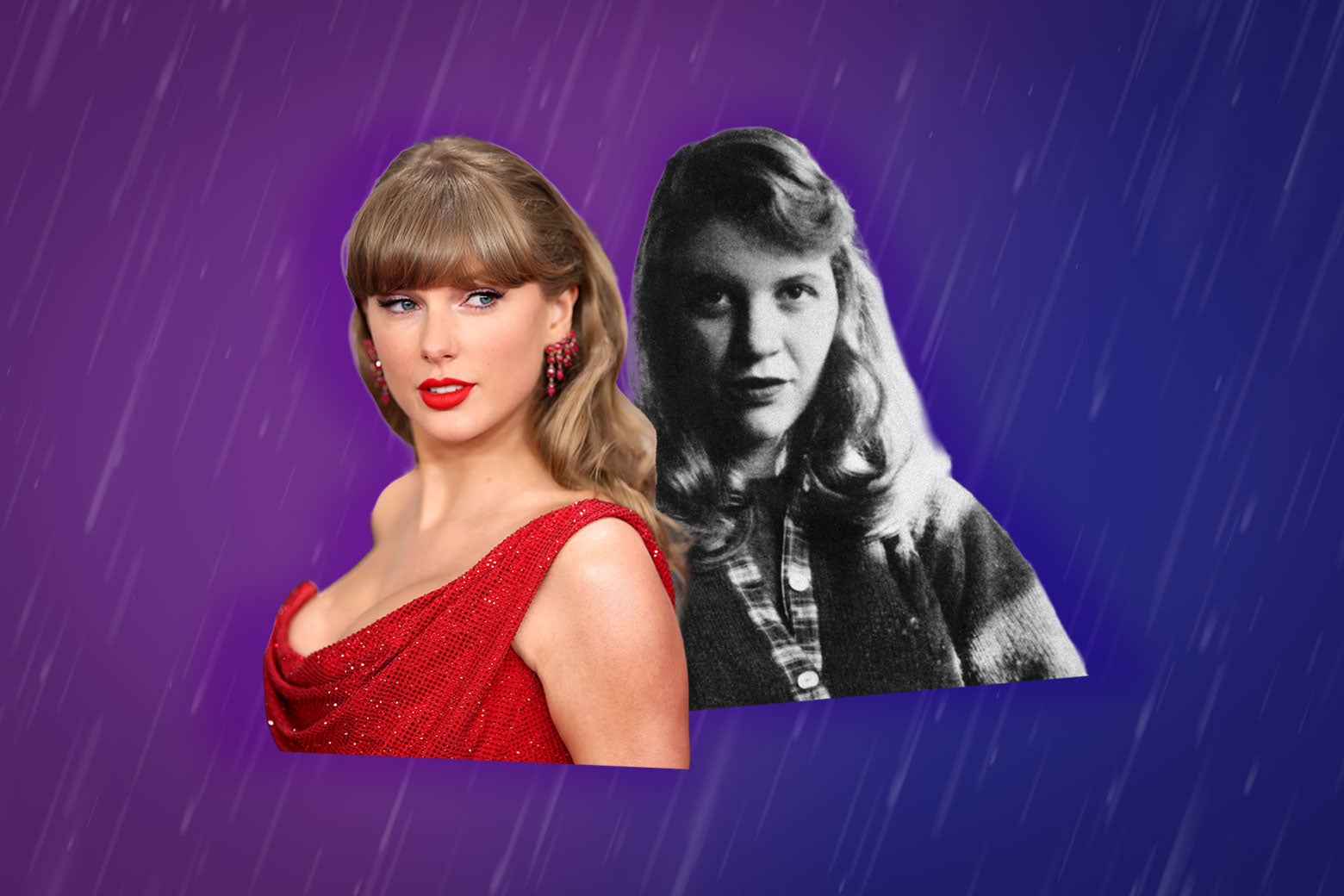
It’s impossible not to recall 2015 when reading Nelson’s latest, The Slicks, a very slim volume—more of a long essay, really—about Taylor Swift and Sylvia Plath. In essence, the book argues that both Swift and Plath have been stigmatized for being excessive, for producing too much work that is too much about themselves, and wanting too much acclaim for it, qualities that Nelson maintains are unfairly reviled in women artists. She complains that both women have been subject to “the same script that has greeted female profusion, personalism, and ambition literally for millennia,” a script that consists of the “rote shaming of making the personal public; calls for the artist to look outside herself for subject matter; charges of her vulnerability being faux, or deployed as a manipulative marketing tool; tongue-clucks about self-indulgence and being ‘in need of an editor.’ ”
Ten years ago, analysis like this seemed to be everywhere. A new generation of young women writers chafed at the persistent sexism in the literary world. An organization called VIDA: Women in Literary Arts published annual tallies of how many books by women were reviewed in the New York Times Book Review and other publications. A Facebook group called Binders Full of Women Writers formed to help its members network and discuss workplace biases. Essays like Claire Vaye Watkins’ ”On Pandering”—both an account of the author’s encounters with dismissive literary men and a confession of her own complicity in trying to impress them—appeared in journals and were fervently discussed online. Most (though not all) of these denunciations of the literary world’s sexism were the work of white women, and it was only a matter of time before the rhetorical heat would move on to matters of race and the overwhelming whiteness of book publishing. Binders descended into the infighting and moral oneupmanship that plagues so many online communities, and VIDA’s website is now MIA.
But in the pages of The Slicks, it’s still 2015, and Taylor Swift, Nelson insists, needs defending. I’ll confess that I don’t follow pop music and until recently couldn’t have recognized one of Swift’s songs if I came across it on the radio. Swift means nothing to me personally, one way or the other. But because I have no dog in this fight, I believe I have a pretty good sense of the ambient attitude toward Swift, which strikes me as overwhelmingly positive, considering the height of her celebrity. She is incredibly popular, is relatively free of toxic controversy, and seems to be in control of her artistic and professional life. Of course, Swift has her naysayers, but none mighty enough to derail one of the biggest recording artists of all time.
So I was surprised to learn from The Slicks that Swift has allegedly been criticized for her unseemly “flow”—that being Nelson’s term for the quantity of music the singer releases. Also, according to Nelson, “the patriarchy” objects to Swift’s confessional songwriting, which is usually about her love affairs and breakups. Who were these critics, and how did they defend their positions? Surely a long essay written in response to such criticism would quote it at length to illustrate and challenge the sexist language and assumptions embedded within it?
It turns out that The Slicks seems to have been inspired by precisely three New York Times items: a review of Swift’s 2024 album The Tortured Poets Department, a podcast in which three critics discuss the album, and an op-ed by columnist Ross Douthat, who is not a critic but a father who spends a lot of time listening to Swift while driving his “tween-age daughters” around and wishes Swift would occasionally write about something besides herself. None of these are quoted at any length in The Slicks, and Nelson describes the first two as simply the institutional pronouncements of “the New York Times,” rather than naming the people, both women, who voiced them.
The Times may still be the paper of record, but this seems a pretty slender hook on which to hang a book-length essay. A closer look at the offending material reveals that the review, by Lindsay Zoladz, is long, thoughtful, musically knowledgeable, and—most pertinently—appreciative of Swift’s many gifts. Zoladz’s main complaint, echoed in the review’s headline, is that Swift “needs an editor.” The album, Zoladz writes, contains many gems but is also “sprawling and self-indulgent,” consisting of two “volumes,” for a total of 31 songs. As for the podcast in which Nelson accuses “the Times” of “posing the question ‘Will Swift ever voluntarily step away from the spotlight?’—as if beholding a woman in full flow and power invariably summoned the fantasy of her involuntary removal from the scene”? This question was in fact sent in by one of the podcast’s listeners. The listener, a woman who professes to be a longtime fan, wonders if Swift will “take a break” if fans seem to have become glutted on her output.
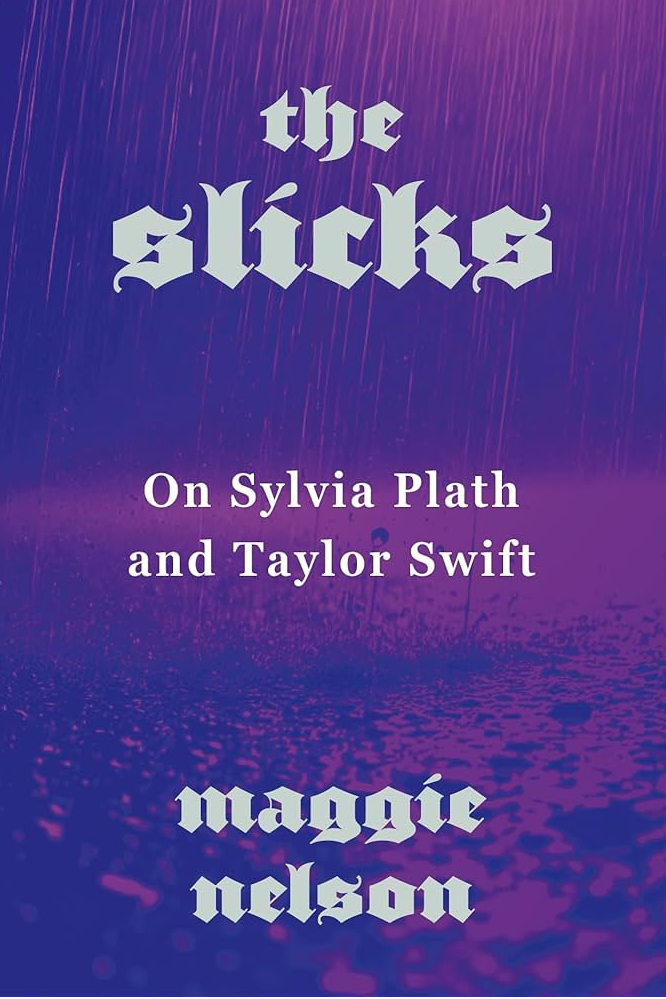
The Slicks: On Sylvia Plath and Taylor Swift
By Maggie Nelson. Graywolf Press.
Slate receives a commission when you purchase items using the links on this page. Thank you for your support.
The work of every artist varies in quality. Some writers, painters, and musicians obsessively destroy anything they consider substandard, while others—including, apparently, Swift—release nearly everything. The Tortured Poets Department became a massive hit, so evidently Swift fans appreciate this policy. But no critic is obliged to agree with the fans, even when—like all of the New York Times critics Nelson takes issue with in The Slicks—they claim to be Swift fans themselves. Editing is a part of art-making, and the observation that an album (or movie or novel) would be stronger if some of its weaker elements were removed is a legitimate point for any critic to make.
But is it sexist? Nelson is absolutely correct that women who produce autobiographical art have often been accused of unseemly exhibitionism, indiscretion, and other forms of messiness, and that this criticism historically has been inflected with misogyny. As for charges of “needing an editor,” however, in my experience—which is primarily in literary criticism—this is a charge more often leveled at men. In an essay that went viral during that heyday of mid-2010s online literary feminism, “Men Recommend David Foster Wallace to Me,” for example, Deirdre Coyle complained of the many obnoxious men who had urged her to read Wallace’s Infinite Jest. So many, in fact, that she formed the “deeply felt” opinion that Wallace was an “overly self-aware genius who needed a better editor,” despite not having read anything he’d written. I’ve heard similar remarks made about Thomas Pynchon, William Vollmann, Neal Stephenson, and Stephen King—specifically for the “author’s cut” version of The Stand.
How does Sylvia Plath figure into this? Well, Plath, who took her own life in 1963, is the epitome of a tortured poet, and furthermore, Zoladz quotes Plath in her review of The Tortured Poets Department. Poetry, Plath wrote, is “a tyrannical discipline,” requiring the writer to “burn away all the peripherals.” In other words, Zoladz holds Plath up as a counterexample to Swift, an artist who honed her work down to essentials, certainly an accurate description of Plath’s best-known collection of verse, Ariel, published after her death. Nelson links Plath to Swift by noting the fierce ambition of both women. Plath wanted to be famous and relentlessly pursued publication in the “slicks” of the book’s title—glossy magazines that paid very well and could make even a poet a household name.
Let’s grant Nelson’s assertion that “shockingly sexist estimations of her work by male critics” appeared after Plath’s death, although she offers no evidence of this. (It was the mid-1960s, after all.) Were they sexist because they found Plath’s work too “confessional” (a term first coined to describe the poetry of Robert Lowell) and therefore more “feminine”? Was she disparaged—as Nelson insists Swift has been—for the “abundance” of her work? Surely Plath, who published only two books during her lifetime and left only one collection to be published posthumously, can’t be called prolific, let alone overly so. Plath wrote about her private life, as most poets do, and her battle with bipolar disorder, which also afflicted Lowell. Swift writes about love, as most pop songwriters do, but not about chronic mental illness, from which, as far as the public knows, she does not suffer.
Nelson sees some profound connection between these two women—specifically in the unfair way she feels their work is regarded—but in the end fails to convincingly demonstrate it. One peril in writing about what “people” are saying about an artist is that each of us swims in a different soup of party conversations, social media posts, online articles, comment threads, and classroom discussions. Maybe Nelson has been surrounded by Swift and Plath haters. I haven’t. Way back in my antediluvian undergraduate days, Plath was spoken of by my professors—male and female—with the utmost respect. Many of my friends adore Swift, and the rest pay no attention to her. The only evidence Nelson offers for the pervasive biases against Swift turns out to be both tenuous and disingenuously presented. She leans way too hard on a presumption of gendered disgruntlement that hasn’t prevailed in a decade. I may not care about Taylor Swift, but I do care about good criticism, and The Slicks isn’t that.
Correction, Dec. 1, 2025: This article originally misstated that Nelson’s relationship chronicled in The Argonauts was with a transgender man and that Nelson underwent in vitro fertilization.