Sign up for the Slatest to get the most insightful analysis, criticism, and advice out there, delivered to your inbox daily.
It’s an almost universal experience these days: You’re paying more for goods and services, but the quality has gotten much worse. Facilities may be dirty and understaffed, customer service is poor, and it’s just kind of depressing. In some cases, inflation may be to blame. In many others, private equity is the nefarious force targeting everything from funeral homes to perhaps the most notable victim of the PE trap: the health care industry, where lower standards can be deadly.
Private equity’s hand in the economy has become increasingly visible in the past few years, as it has taken over local businesses and even gutted beloved chains like Red Lobster. Deteriorations in health care quality are also raising awareness. “The health care system is so fucked up, and more and more people know that it’s PE that’s doing it,” says Martin Kenney, professor emeritus in human ecology at the University of California, Davis, and co-author of Private Equity and the Demise of the Local.
The Federal Trade Commission, under the direction of Commissioner Lina Khan, worked with the Department of Justice and the Department of Health and Human Services to investigate PE’s role in decreasing health care quality, and created policies to intervene during the Biden administration. Hannah Garden-Monheit, who was the FTC’s director of the Office of Policy Planning under Khan, says that growing evidence shows that PE investment in health care markets has created a pattern “of care getting both expensive and unsafe.” Whether the new Trump administration will continue Khan’s progress is unclear.
Some of President Donald Trump’s closest advisers are implicated in the exact kind of monopolizing behavior that Khan aggressively pursued. Steve Feinberg, who Trump has tapped to become deputy secretary of defense, was the co-founder of Cerberus Capital Management, a firm that focuses on “alternative investments” in a variety of industries including private equity, credit, and mortgage-backed securities. Cerberus’ approach is “extremely aggressive,” says Brendan Ballou, a former federal prosecutor and author of Plunder: Private Equity’s Plan to Pillage America. Cerberus was “instrumental” in the creation of Steward Health Care, a Massachusetts hospital chain that cut corners on things like basic cleanliness—a mold outbreak at one location reportedly led to four patient deaths. Nurses also reportedly had to put the remains of newborn babies into cardboard shipping boxes at Steward hospitals that didn’t pay for proper “bereavement boxes.” “The concern would be that Feinberg would do to the entire American health care system, or the entire defense system, what he and his firm did to Steward,” Ballou says.
Steward Health Care’s inception was made possible by a common PE maneuver called a “roll-up”—buying up lots of smaller firms within an industry and housing them under one umbrella. Often, PE firms target local industries that are “quite dispersed,” Kenney explains. Many times, these businesses are family-run operations, but maybe the next generation doesn’t want to carry the torch. Kenney used funeral homes as an example: If a company comes in and buys 100 local funeral homes, turning them “into one big funeral-home firm,” it reduces competition, but creates a revenue engine for the PE owner at the top. These investors start out doing this on the local level, and can keep doing it over and over until they have an even bigger monopoly across multiple states.
The FTC began to target roll-ups for the first time under President Joe Biden, according to Garden-Monheit. “What really matters is the pattern of transactions in which you’re buying up a bunch of competitors,” she explained. In order to detect these, the FTC changed disclosure requirements so PE firms have to provide information about past acquisitions. Once guidelines changed to make it easier to detect monopolizing behavior, the FTC initiated a series of lawsuits to go after that behavior.
And Khan’s FTC targeted monopolizing behavior not just among PE firms. In 2022, the agency released a statement reaffirming its commitment to combat “unfair tactics” in market competition. In it, Khan implied past regulators had shirked their duties and become too lax, saying, “Enforcers have to use discretion, but that doesn’t give us the right to ignore a central part of our mandate.” The FTC, in conjunction with 17 states, sued Amazon in 2023 for “illegally maintaining monopoly power” through maneuvers like boosting their own products and advertisements rather than showing relevant search results, and charging exorbitant seller fees. Days before Trump took office, the agency also sued Deere for using their monopoly power to drive up equipment repair costs.
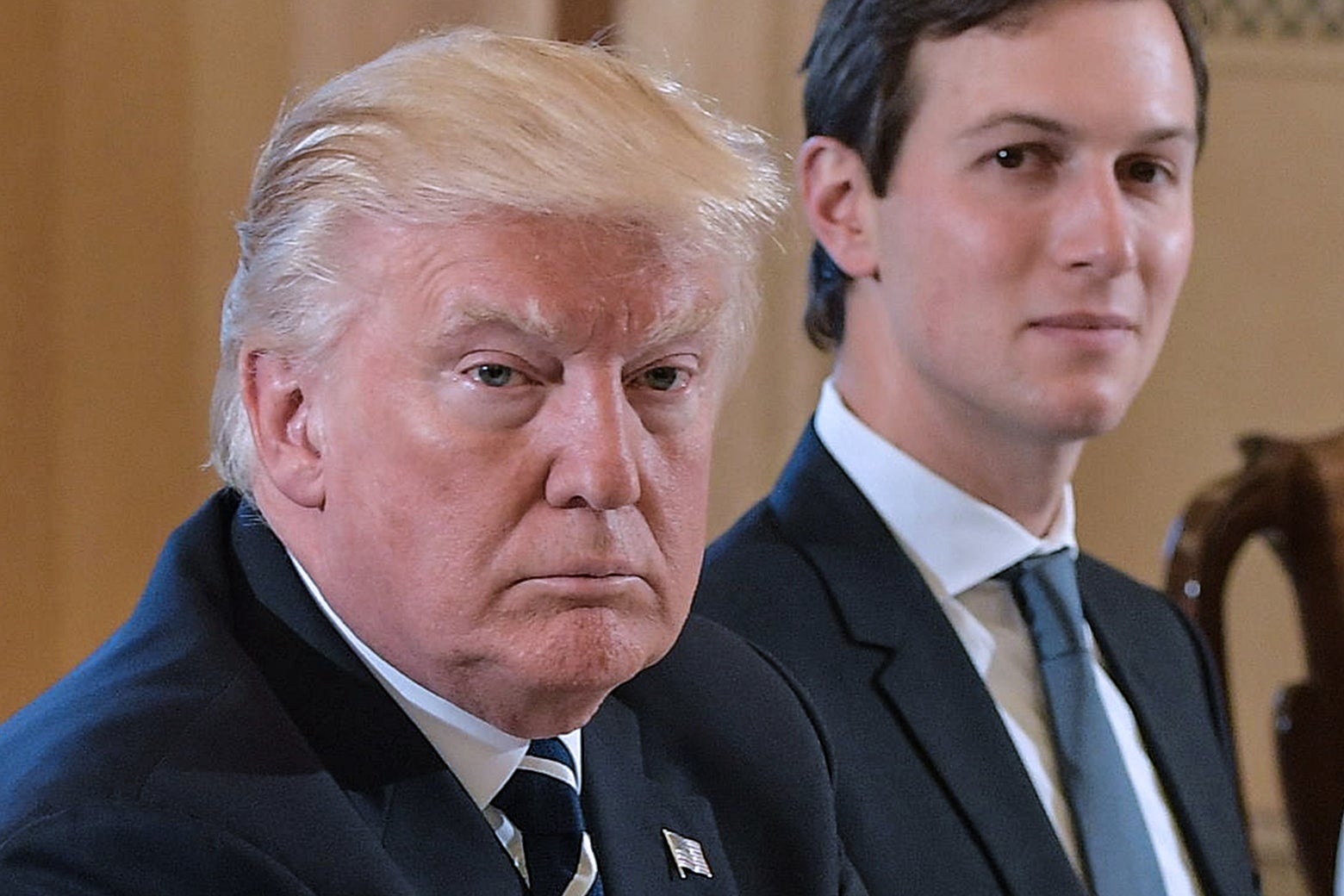
Given Trump’s growing ties to tech bros and other business tycoons who may have caught the attention of previous administrations’ enforcement arms, it’s hard to see why his administration would continue to go after any monopolizing tendencies, especially in the PE industry. Aside from Feinberg, Jared Kushner has his own PE firm, and Steve Schwarzman, who runs the U.S.’s largest PE firm, Blackstone, is another close ally to the president. But inaction on PE could actually alienate part of Trump’s base.
“There’s sort of two parts of the Trump coalition,” Kenney explained. There’s his circle of wealthy insiders, but there are also populists like Steve Bannon, who hate monopolies that kill small businesses. “So the question is who’s gonna win and lose in the push and shove,” said Kenney, adding that Biden faced a similar conflict given that he also has donors and allies with close ties to PE.
Trump has already been talking a big game about populism. In an executive order issued on his first day in office, he promised to lower the cost of living and thus “increase the prosperity of the American worker.” But “whenever that [populist] agenda comes into conflict with the donors, to the administration and the campaign, it seems that the donors tend to win,” Ballou says. It’s hard to imagine how the president would be able simultaneously allow PE firms to monopolize industries and gouge prices while delivering on his promise of prosperity for everyday Americans. You can’t promise lower prices while backing away from regulations that create the competition necessary to lower those prices, Garden-Monheit says.
Deregulation, however, is exactly how Kenney suspects the Trump administration will attempt to lower prices. For example, if food safety regulations are dismantled, food “might be poisoned, but it’ll be cheaper,” said Kenney; “I think that’s how he thinks he’s gonna make that happen. You can go buy spoiled meat at the store—it’ll be cheap.”