Sign up for the Slatest to get the most insightful analysis, criticism, and advice out there, delivered to your inbox daily.
I know a woman, a friend of a friend, who went into credit card debt for an abortion. Another who asked an estranged parent for the money. (They said no, and it further damaged the relationship.) Then there was my student who told me that she had been carefully saving for a down payment on a house, but had to use it to travel across multiple states to get an abortion. After the procedure and travel costs were accounted for, she had spent thousands. And yet, she was one of the lucky ones. She had the money. Many women do not.
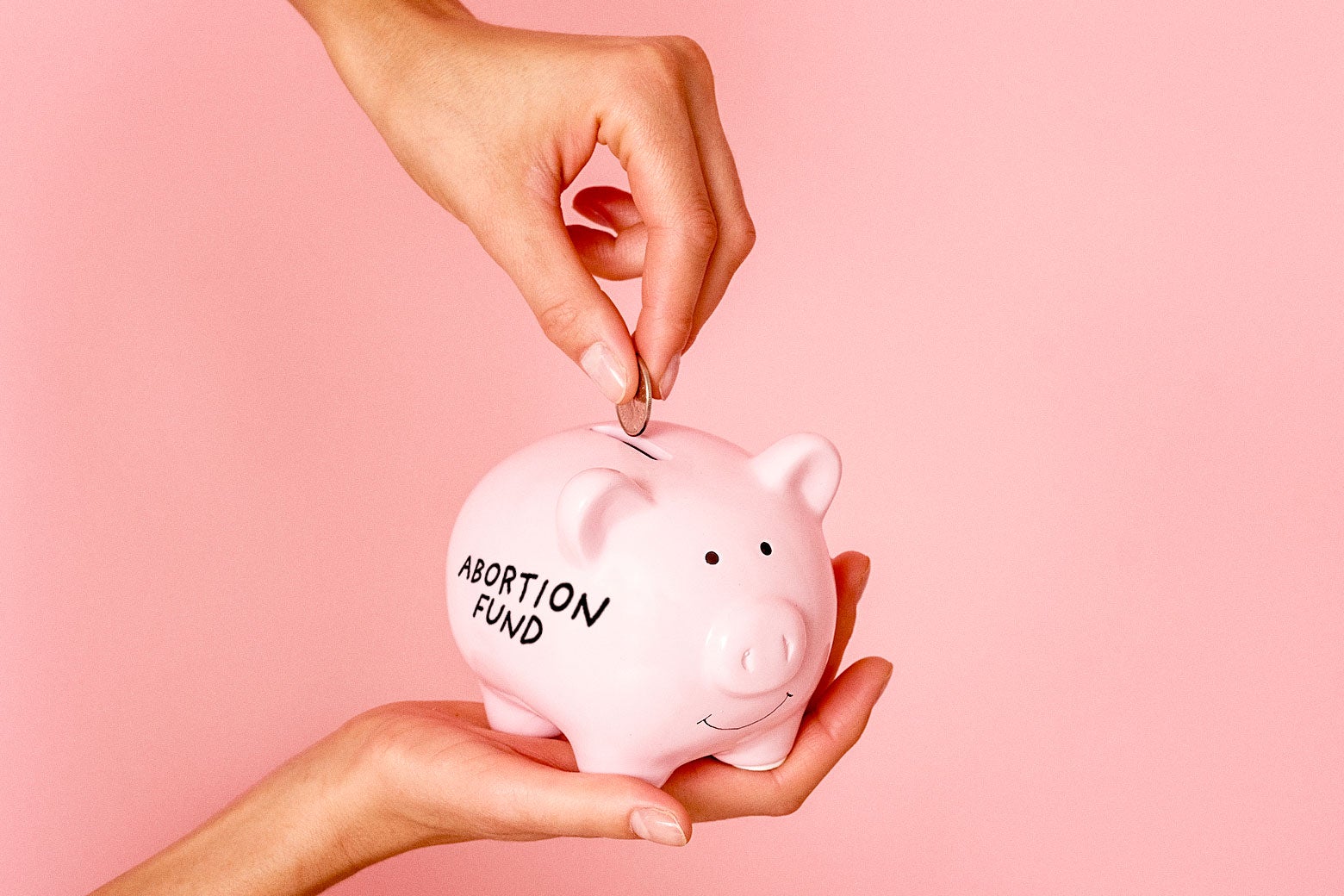
I teach women about their money for a living. Lately, I’ve lost count of the stories about the impossible financial choices women are making just to access an abortion. As lawmakers take increasingly hostile stances against reproductive rights, it’s only going to get worse. This is why, as a finance educator, my most critical piece of financial advice for 2026 is this: Build a personal abortion fund.
The fall of Roe in 2022 created a full-blown national crisis: An estimated 31 million women of reproductive age now live in states where abortion is banned or under threat. While the price of this lack of access is nearly always paid in women’s security, both reproductive and economic, there is a spectrum of loss.
For those with means, accessing abortion still represents a sudden, steep tax. A draining of savings, a taking on of debt. In 2023, 170,000 patients traveled out of state for abortion care. Another 155,000 in 2024. For my student, the one who used her down-payment money, the bargain felt cruel and unfair: a direct trade of future security for a present medical necessity, borne by her alone. It takes two to tango, but it was only she who paid the band.
For those without the means, who are forced to carry pregnancies against their will because of their inability to pay for an abortion, hardship compounds deep into the future. The economic data on forced motherhood is unambiguous; it leads to financial precarity, often for a lifetime.
Abortion medication by mail (also known as Plan C) is one of the few lifelines left, and now makes up 63 percent of abortions in the United States. Although Plan C may not be appropriate for every situation, like later-term abortions, they are the only option for plenty of women, and nonbinary and trans people, across the country. They can be ordered online and delivered in unmarked packaging to all 50 states. Ranging from free to hundreds of dollars, abortion pills are typically more affordable than an in-clinic procedure, and certainly more affordable than traveling for one—at least, for now.
Abortion pills are currently under direct and deliberate attack (by anti-choice politicians, who show us again and again and again that they are more than happy to get an abortion when they need one themselves). Trump’s Christian nationalist political blueprint, Project 2025, and its extension, Project 2026, lay the groundwork to ban abortion pills and criminalize their distribution by mail. The broader strategy aims to criminalize abortion entirely, in part by establishing fetal personhood across federal agencies.
Normally, I use my small platform online to draw attention to the connection between reproductive rights and economic rights, and advocate for abortion access for all. But as I read through Project 2026’s explicit agenda to fracture women’s autonomy through profound financial and logistical chaos, something cracked in me. I made a raw appeal to my followers: You don’t need an emergency fund. You need an abortion fund. And not just for you, but for your best friend too. I strongly believe that our collective fight must now be matched by concrete personal preparation. To get through the dark years ahead, we will have to rely on ourselves, and just as critically, on one another.
This goes for the guys, too! If you have sex with people who can get pregnant, you have, ahem, skin in this game. Building an abortion fund means taking responsibility for your own reproductive choices and being an ally to your partners. At this moment in history, that financial preparation is both the right thing to do and a smart investment in your own future.
The personal abortion fund has two essential components: cash and a physical tool kit. The cash is exactly what it sounds like: money that is liquid and held in an accessible bank account or a safe. This covers travel, time off work, and the price of the procedure. (Yes, this is just an emergency fund, by another name.)
In the United States, the average cost of an in-clinic abortion ranges from $500 to several thousand dollars. Health complications, the kind that can happen to anyone and require an in-clinic abortion, can push costs much higher. And then if you are traveling, add a few thousand dollars to that. To estimate your costs by ZIP code, use the calculator at ineedana.com. Yes, it’s enraging that our country forces women to stockpile thousands for basic health care while making it nearly impossible to save in the first place. Still, you won’t regret doing whatever you can. Open a designated savings account and set up an automatic transfer, even if it’s just $10.
The physical tool kit includes birth control, emergency contraception (Plan B), and Plan C. Because—yes!—crucially, Plan C can be purchased even if you are not pregnant. Especially if you live in a state where abortion rights are under attack, please consider buying these now. Even if you have no plans to get pregnant, you can keep these essential resources stocked for the women and young people in your life.
Build your abortion fund now, while you still legally can. As you do, here are a few resources:
Plan B can be purchased for around $7 on Amazon or at Costco pharmacy. A Costco membership is not required for pharmacy access.
Hey Jane and Plan C have abortion medication. Look for sliding-scale discounts. There are options for free pills to pregnant people with no funds; others allow advance purchase for as low as $48.
Planned Parenthood, I Need An A, and Abortion Finder can help locate out-of-state abortion providers.
Consider getting an IUD. There are hormonal and nonhormonal (copper) options.
Here’s how to protect your privacy when using your computer or phone.
If you need financial assistance, established mutual-aid networks, also called abortion funds, provide direct financial assistance. Do not hesitate to seek help.
Once your personal abortion fund is stocked, and if you’re on stable financial ground, consider donating to collective abortion funds. This is how we’ll provide immediate support to women living in states with abortion bans while we continue our fight for safe, affordable reproductive health access for all.