Read more of Slate’s 2026 Olympics coverage here.
As Olympic ice dancers swirl across our TV screens this week, we get to play another round of everyone’s favorite figure-skating game: Are they or aren’t they dating? I’ll give you one free answer to this Milan Cortina pop quiz: Team USA’s gold medal hopefuls, Madison Chock and Evan Bates, got married in 2024. But the answer to ice dancing’s perpetual are-they-or-aren’t-they question isn’t always so straightforward.
Since the beginning of time, ice dancers have been rewarded by judging panels for playing up a romantic narrative regardless of their actual romantic status. Some duos pretend they’re dating when they’re really not. Some pretend they aren’t dating when they actually are (or are tipping in that direction). Some have broken up, but still manage to skate together, fueled by all that water (OK, ice) under the bridge. Some have lovers outside their skating partnerships and/or have come out as LGBTQ+. (Same-sex teams are finding increasing acceptance, but are still not allowed in the Olympics.)
And then, there’s another category of skating team that has nothing (and I mean nothing) to do with this dating game: siblings.
For 11 years, I skated with my older brother Brad in both ice dance and pairs. Starting when I was 8 and he was 13, I had to hold hands with him, let him lift me into the air, and hope—usually while holding my breath—that he didn’t drop me.
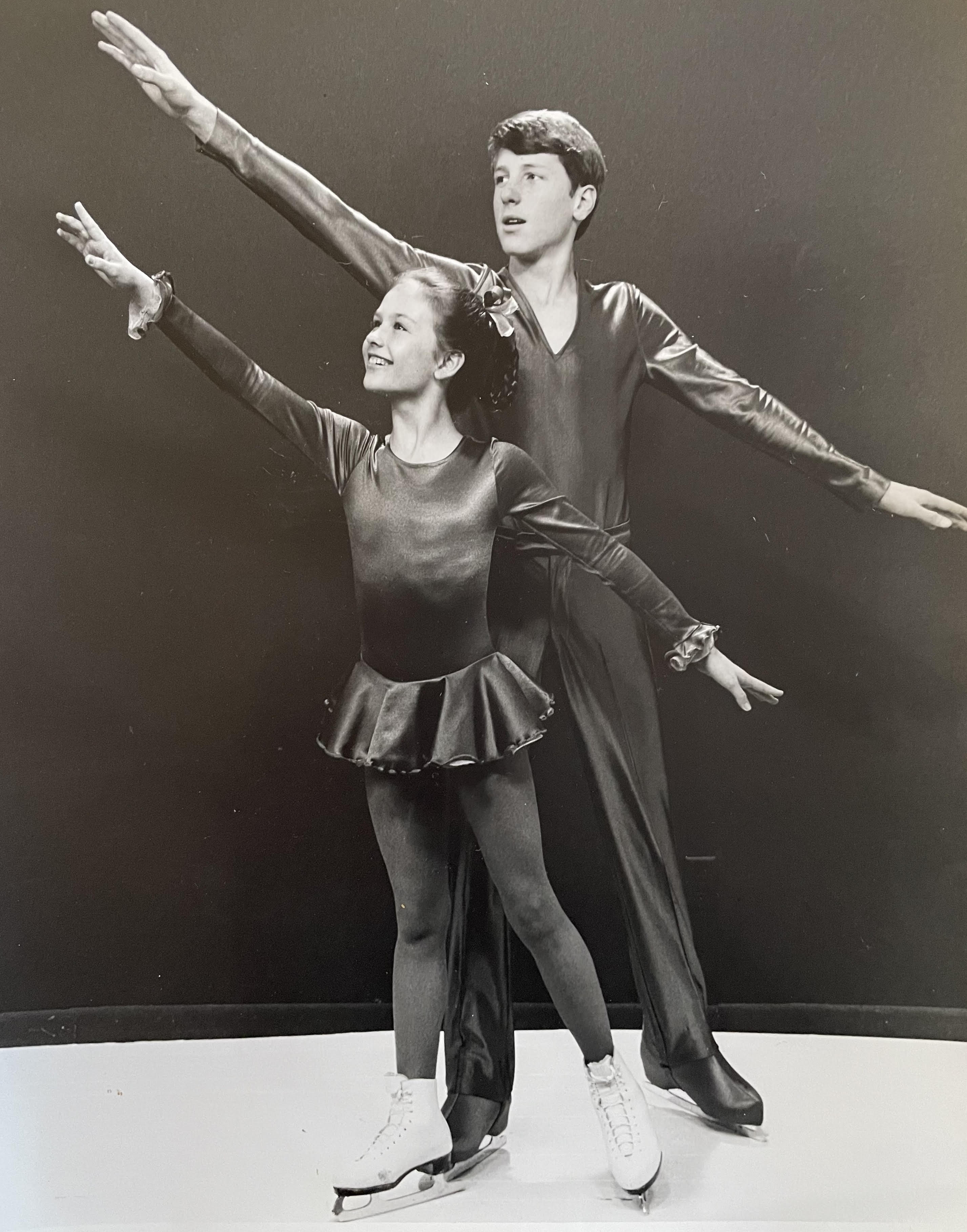
We spent ridiculous amounts of time together inside cold ice rinks, en route to other far-flung ice rinks, and engaged in all manner of off-ice training, including ballet and ballroom lessons. For us, this wasn’t just some childhood hobby: Although we didn’t make it to the Olympics, we did compete in the U.S. Figure Skating Championships four times.
For dramatic effect, I’d like to say that we made each other miserable, but, truthfully, we had a lot of fun. I didn’t know any other little sisters who got to hang out with their older brothers for more than 30 seconds. I got to pal around with mine while wearing matching outfits, sometimes with sequins. When I wasn’t spraining a limb or accidentally breaking his nose, we had name-that-tune whistling contests and shared a whole array of inside jokes we were certain no one else could possibly understand (and we were right).
In all those years, I think I only angrily punched my brother once, only ran away from the rink twice, and only gave him the silent treatment 50,000 times. Even though we never missed the opportunity to fight over whose turn it was to sit in the front seat on the interminable drive from our small town in Wisconsin to lessons with an Olympic coach in Chicago, I always knew my brother had my back and that another bout of laughter was just as likely as another round of tears.
Over the years, we waltzed, we tangoed, and we performed one samba dance that couldn’t have been more antithetical to our personalities, our physical skill sets, or the fact that we were siblings. I would similarly like to forget that we once skated to “I’ll Be There” by the Jackson 5 in the Valentine’s Day segment of a local ice show. This music was assigned to us by the show’s director, but we didn’t balk (and we both liked that song).
Once, when we were appearing as guest skaters somewhere in Michigan, a little kid asked us, back by the locker rooms, if we were married. This was due, I suppose, to our shared last name. “No!” we both blurted with the force of projectile vomit.
In an on-ice world where we weren’t the norm, Brad and I were always looking for someone we could emulate. By the time we were teenagers, we’d found that duo: a French sibling team, the Duchesnays.
Paul and Isabelle Duchesnay were not only the 1991 world champions, they had cool, intricate, and sometimes aggressive choreography. It appeared that they were skating parallel to each other, in tandem. Or, to put it another way, they skated with each other but not with each other. By blatantly rejecting any hint of romance, it seemed they were spurred toward more creativity.
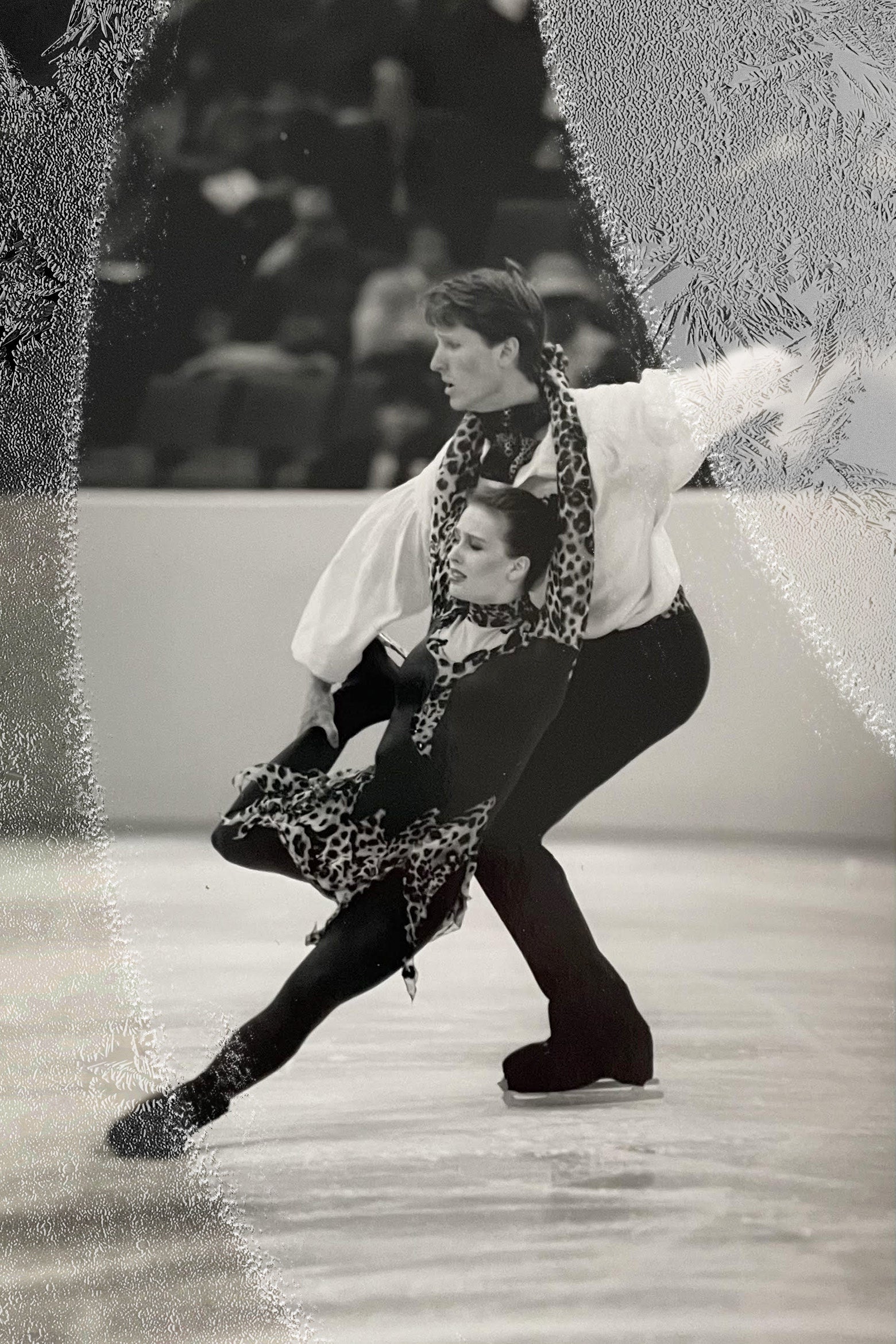
My brother and I hit our ice-dancing stride in our last performance together, in 1991. In that program, Brad played the role of a hunter and I pretended to be a tiger. Don’t worry, those two sworn enemies became (platonic!) friends by the end.
While sibling duos like us make up a relatively small percentage of the ice-dance population, there always seem to be a few. For parents, this is logistically convenient—why drive to two different venues when you can just go to one? For coaches, there’s a stability factor. Sibling teams do occasionally break up and seek other partnerships, but in a field where partner shuffling is frequent, they typically stay together longer than others. And while siblings can’t play the romance card that judges seem to love so much, they tend to have the ability to mirror each other’s movements with an accuracy that proves more difficult for teams that don’t share the same DNA.
The most successful sibling team in recent history was the American duo of Maia and Alex Shibutani, aka the Shib Sibs. Seven years removed from their two bronze medal wins in 2018, the Shibutanis attempted a comeback this year, but despite their smooth edges and iconic precision, missed out on an Olympic return. (Also, a leaked video that surfaced last year showed Alex berating Maia during a practice session, a sad spectacle that pierced their well-cultivated image of sibling camaraderie.)
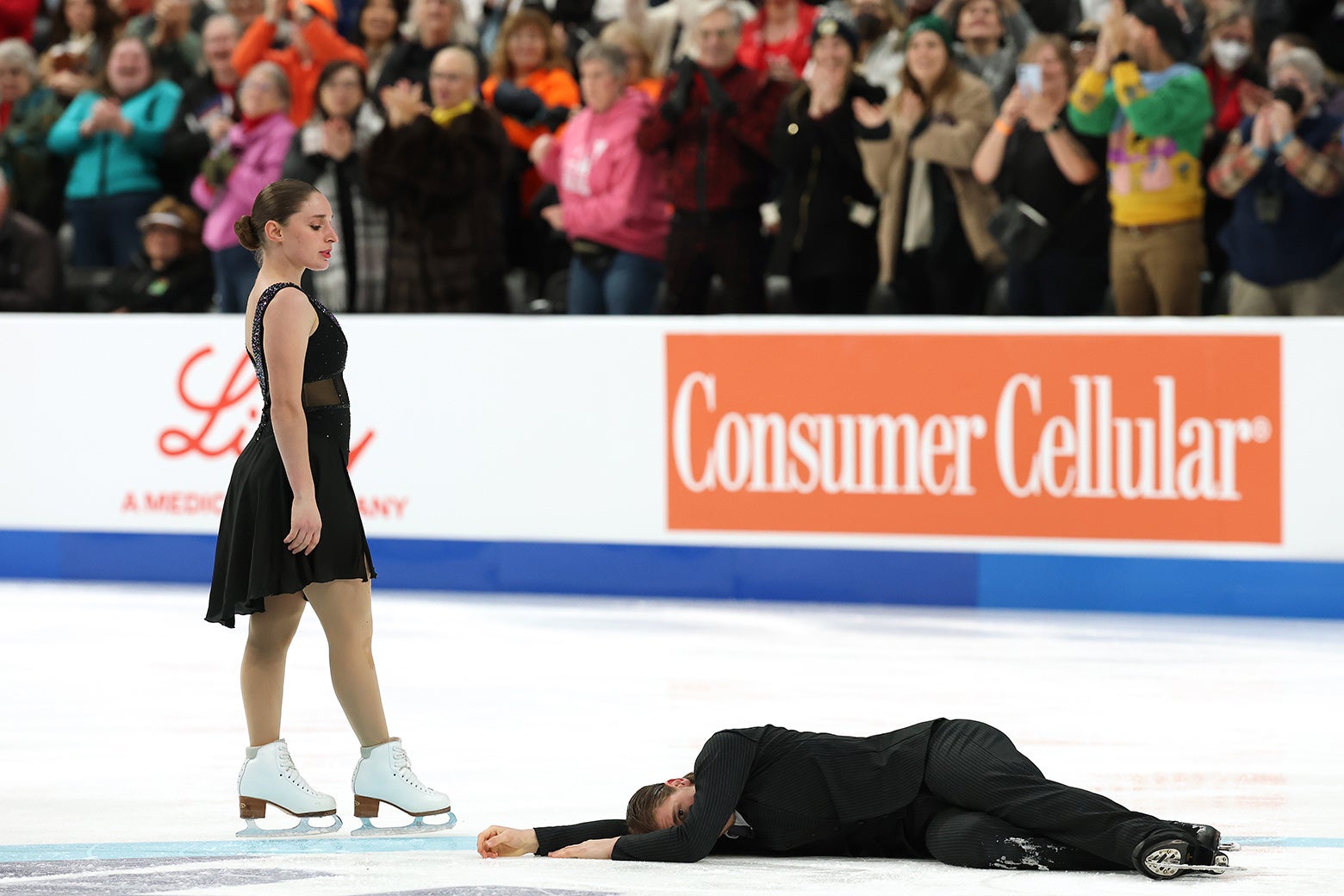
Other than the Shibutanis, there were two more championship-level sibling teams at the 2026 U.S. Figure Skating Championships. Although they didn’t make it to the Milan Cortina Games, Oona and Gage Brown did skate to sixth place with a creative Godfather free dance, with simple black costumes and demeanors that were somehow both serious and playful. At the end of their performance, Oona “slit” her brother’s throat (oh, the admiration that coursed through me!), then skated a slow circle around his body while the audience, including me, stood for a standing ovation.
At the Olympics, we’ll see two sibling teams: Mrázková and Mrázek and Taschlerová and Taschler, both from the Czech Republic. For the free dance, the Mrázeks will be skating an angry, athletic tango that reads less like an Argentinian style of foreplay and more like a “you’ve been annoying me since the day you were born” rivalry. The Taschlers will be skating to music from the Matrix soundtrack, bringing futuristic, sci-fi vibes to Milan’s slippery ice surface. They have mentioned in at least one interview that they are consciously portraying Neo and Trinity (who are, admittedly, love interests), so it will be on us to ignore this.
Far away from the 2026 Winter Games, in ice rinks around the world, there are skating partnerships forming that could end in embittered disaster and others that could lead to marriage. There are also a handful of sibling teams taking their first steps on the ice. I trust that their coaches and parents will have the good sense to steer them away from music and themes they’ll regret in the future. Even so, part of me wants to scream, “No, don’t do it! Skating with your sibling is kind of a weird way to go!”
The other part of me giddily imagines how, like the Duschesnays, the Browns, and briefly the Coxes, they’ll continue to push the whole sport in new directions. I can’t wait to see what they do next.