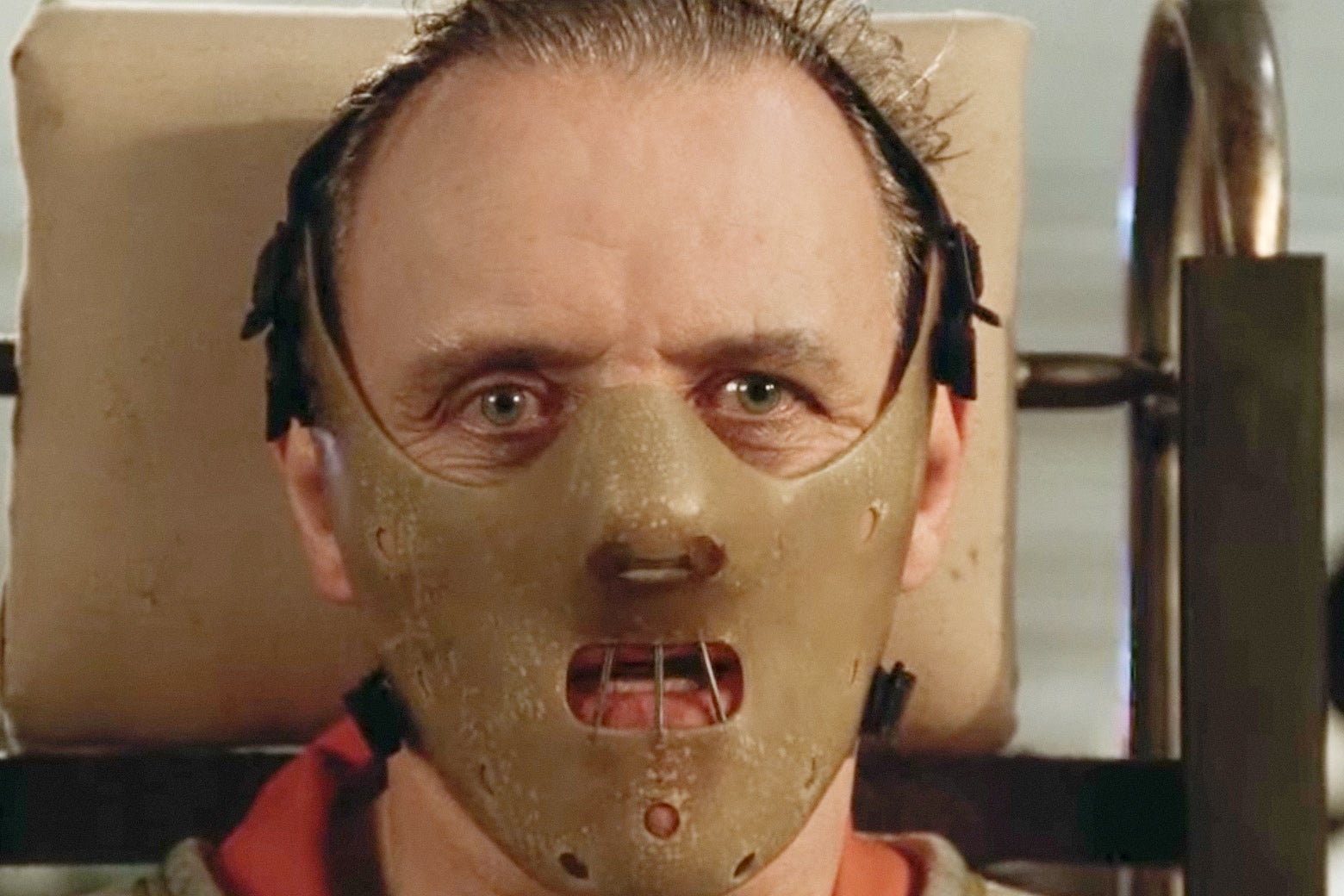
By the late 1980s, Anthony Hopkins figured that his Hollywood career was over. The Welsh-born actor had spent much of the decade living in the United States, where he split his time between the stage and the screen, building an utterly respectable career. He had played a compassionate doctor in David Lynch’s The Elephant Man, a murderous ventriloquist in the cult thriller Magic, and the real-life convicted child murderer Bruno Hauptmann in the TV movie The Lindbergh Kidnapping Case, for which he had won his first Emmy. (He’d get his second a few years later, for playing Adolf Hitler in The Bunker.) Hopkins often inhabited madmen or sickos, yet he could locate flashes of pathos or longing in even the most despicable character. “You have to play an evil monster as a human being,” he said.
Hopkins had seen plenty of banal maliciousness while growing up in post–World War II Europe, where he had felt stupid and useless, a self-described oddball whose teachers constantly reminded him of his failings. “Our education was hideous—a lot of corporal punishment,” he said. “I was terrible in everything.” As a teenager, he took inspiration from his local movie star, Richard Burton, the stage actor and then ascendant Hollywood dynamo who lived near Hopkins in a working-class Welsh seaside town. At the age of 15, Hopkins knocked on Burton’s front door to request an autograph, catching his hero midshave. (“I remember that stare, with his green eyes,” Hopkins later said.) Afterward, as the young boy was walking home, Burton and his wife cruised by in their Jaguar. “I wanted to become somebody like that,” Hopkins said. “I just didn’t want to be what I was.”
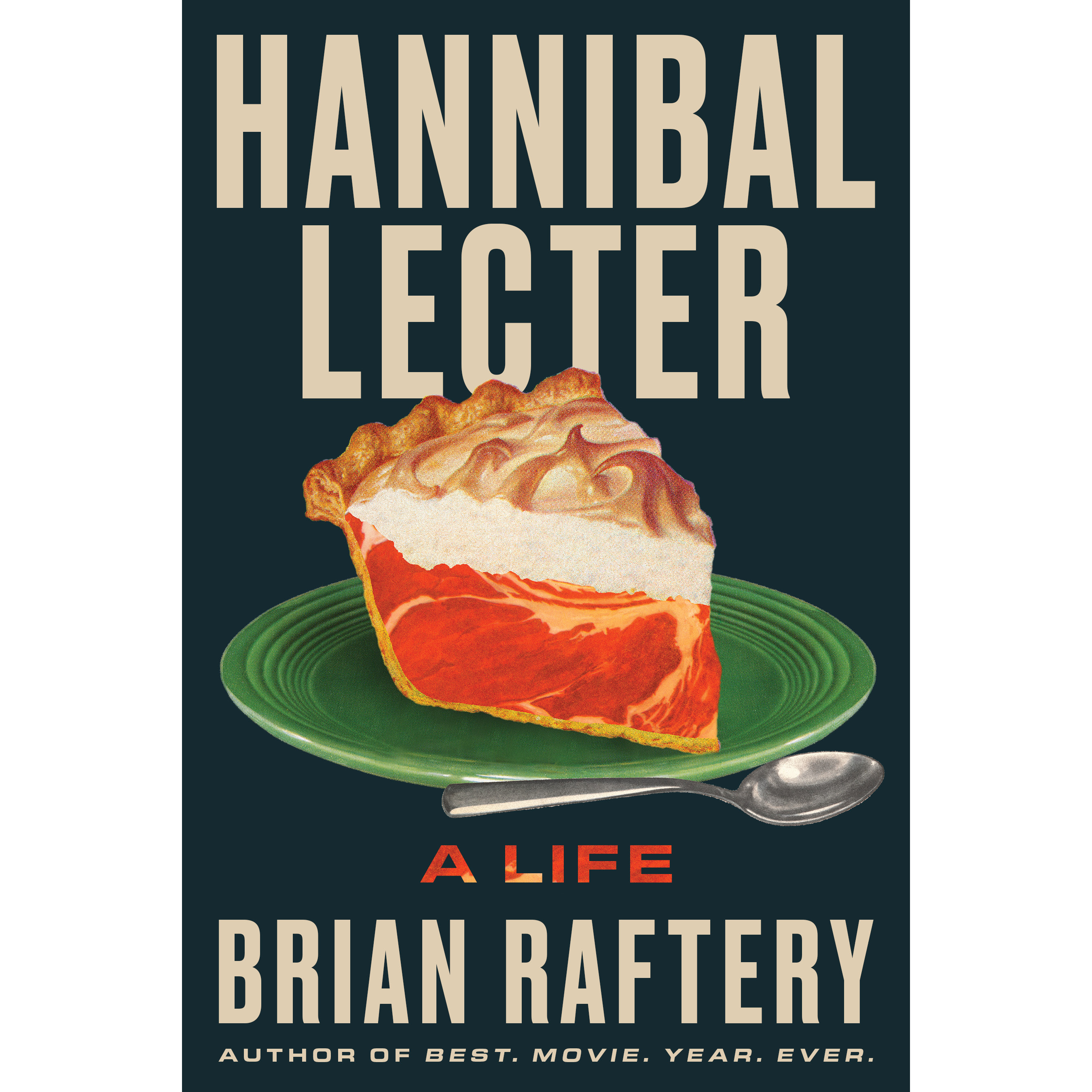
Hannibal Lecter: A Life
By Brian Raftery. Simon & Schuster.
Slate receives a commission when you purchase items using the links on this page. Thank you for your support.
He began performing a few years later, using the stage to work out his antisocial tendencies, which he could suppress for only so long. “I used to feel like a closed fist,” Hopkins said. “I’d be angry at the audience and angry at other actors.” He accumulated several screen and theater credits throughout the 1960s and 1970s; during that time, he also earned a reputation as a gifted but combative collaborator, prone to on-set outbursts and private drinking. One day in late 1975, he woke up in an Arizona hotel with no idea how he’d arrived there. He immediately swore off alcohol and found his rage subsiding as a result.
Newly focused, Hopkins steered himself toward movie stardom, saying yes to paycheck dreck such as the 1980 drama A Change of Seasons, which found him in the hot-tubbed embrace of Bo Derek—exactly the kind of film that soon soured him on Hollywood. By 1989, he’d returned to the United Kingdom to focus on TV and stage work. One day, while taking a break from a play, he caught a London screening of the recent, Oscar-winning drama Mississippi Burning. As the credits rolled, Hopkins felt a tinge of regret. All those years of working in Hollywood, yet he’d never gotten a chance to be part of a big, important, everyone’s-gotta-see-it studio production. “That part of my life’s over,” he told himself. “I suppose I’ll just have to settle for being a respectable actor poncing around the West End, and doing respectable BBC work for the rest of my life.”
Not long afterward, he got a call from his agent, asking if he’d be interested in a project titled The Silence of the Lambs. His initial response was muted enthusiasm; he thought that it sounded like the title of a children’s story. And besides, there was no firm offer on the table. Worried that he’d get too excited for a job that might never materialize, Hopkins initially skimmed Ted Tally’s script, which had so frightened the actor’s wife that she couldn’t even get through it. But after reconsidering and reading a few pages, he realized that Silence tapped into the sense of alluring fear that he’d felt as a child while watching Snow White and the Seven Dwarfs. “My favorite character was the witch,” he said. “She was the interesting character to me. And I used to love watching Bela Lugosi in those Dracula movies.”
Hannibal Lecter was part of that long line of canny villains, and as Hopkins familiarized himself with Tally’s script, the doctor began to take shape in his mind. “I somehow knew everything about this man,” he said. “I’d see him in this halflight, in his oakwood office in Baltimore, dark hair slicked back, white shirt, black suit, beautifully manicured hands, black shiny shoes. A man with luminous eyes. Like a machine.” His perception of Lecter was based in part on a stern acting instructor he’d once studied under—a man who “would just take you apart intellectually,” Hopkins said. Even the word Lecter, he realized, had a sense of rigid malice. “It sounds like a black, shiny ebony box,” he said, “full of shiny silver instruments.”
Hopkins’ own name wasn’t known to most American moviegoers, meaning that he’d have some high-profile competition for the role. “Every male in the business wanted to play that part,” said Silence of the Lambs director Jonathan Demme, who needed an actor who could differentiate his Hannibal from the arch version that Brian Cox had played in Manhunter. Demme had admired Michael Mann’s film back in 1986 and decided to rewatch it before making The Silence of the Lambs. “I didn’t get very far,” he said. “I saw one Lecter scene, and I thought, ‘Oh, my God. That’s not my Dr. Lecter.’”
To help in the hunt for Demme’s Lecter, producer Edward Saxon had put together a casting memo in May 1989, naming 75 potential candidates for the character. The list was a wide-ranging, spitballing assortment of late-1980s male performers, including David Bowie, Harrison Ford, Robin Williams, Charles Grodin, Steve Martin, Tom Hanks, Jeremy Irons, Al Pacino, Bill Murray, and Warren Beatty. Demme was also apparently interested in an English stage actor named Edward Petherbridge, who’d starred in the original London production of Rosencrantz and Guildenstern Are Dead, and who was scheduled to discuss the part with the director in person in the summer of 1989. It’s unclear if that meeting ever happened.
But according to Saxon, only two A-list stars were ever seriously considered for the Lecter role. One was Sean Connery, the ex–James Bond whose good-guy persona Demme felt would make for a perversely compelling villain. The other was Jack Nicholson, who was everybody’s go-to choice in the late 1980s, and who’d just starred in the summer blockbuster Batman. Either name would have greatly increased the film’s box-office prospects—while also running up its relatively slim budget. But after Connery and Nicholson passed, Demme set his sights on Hopkins, whose intelligence and humanity had been well deployed in The Elephant Man.
“There’s just something about him that makes you feel, ‘Here’s a man who’s a lot smarter than you,’ ” the director said of Hopkins. “And that’s fundamental to Lecter. This is someone who indeed is brighter than almost anybody else he ever encounters.” Demme made the pitch directly to Hopkins when the two met in London, telling the actor that Lecter, despite his evil acts, was a smart and semidecent guy who just happened to be “trapped in an insane brain.” As Hopkins later recalled, “I think he was right, because what Lecter is really—it’s an old-fashioned word to use—but he’s a gentleman. He has finesse. He’s not Buffalo Bill. When he kills, it’s fast and deadly.”
Demme returned to America more convinced than ever that he’d found his Hannibal. “I’d like to think Tony got just the joke about Dr. Lecter that nobody, save [Silence of the Lambs author Thomas] Harris, may have gotten,” he said. Orion Pictures executive Mike Medavoy had pushed for Robert Duvall to get the part: “I said, ‘I don’t understand why you’re doing it with a British guy,’ ” the executive recalls. But he and Demme reached a compromise, and by December of that year, Hopkins had officially signed on for the film, for which he’d receive $600,000.
The actor’s original agreement included a “Conduct of Artist” clause, which stated that Hopkins would behave “in such a manner as to avoid offending any large and definable segment of the population.” To the filmmakers, the idea that Hopkins’ off-screen activity would somehow denigrate a film about a murderous cannibal was hilarious: “Love THIS—for Lecter??” Saxon scribbled next to the clause, which was later struck.
At 10 a.m. on Oct. 16, 1989, the cast and filmmakers assembled in Orion’s offices in Manhattan, where they held the first run-through of Tally’s script. “Table reads are weird, because you’ll have one person who’s mumbling and another person who’s onstage at Carnegie Hall,” recalls Saxon. “Tony was somewhere in between.”
That was by design. Hopkins saw Lecter as calm, focused, secure. His many inspirations for Hannibal included a nightmare the actor had experienced for years. It found Hopkins answering a doorbell at his home—only to be greeted by the sight of a man standing under a streetlamp, gazing directly at him. Hopkins decided to adopt the man’s blank expression. “If you stare at someone for more than 10 seconds, it scares them,” he said. “I knew instinctively that I should be absolutely still.” He also knew that there’d be expectations that he play Lecter as some sort of raving monster. So he took the opposite approach: Play him nice.
At the table read, Hopkins debuted Lecter’s icy but melodious voice, for which he blended those of three chatty troublemakers: Truman Capote, the high-pitched author of In Cold Blood; HAL 9000, the menacingly even-tempered robot of Stanley Kubrick’s 2001: A Space Odyssey; and the Bryn Mawr–bred motormouth Katharine Hepburn. When combined, the trio’s inflections amounted to what Hopkins described as “a cockamammy American accent.” After trying out his voice in front of the Silence of the Lambs team, “I knew I had got them all,” he said, “because there was this amazing silence at the end of my first speech, and Demme then let out a, ‘My God, yehhh.’ ”
This article was excerpted from the new book Hannibal Lecter: A Life by Brian Raftery. Copyright 2026 © by Brian Raftery. Reprinted by permission of Simon & Schuster LLC.