Slate has relationships with various online retailers. If you buy something through our links, Slate may earn an affiliate commission. We update links when possible, but note that deals can expire and all prices are subject to change. All prices were up to date at the time of publication.
It is a truth universally acknowledged that technology barons both love science fiction and chronically fail to understand what science fiction is trying to tell them. The late Iain Banks’ Culture novels, about a utopian socialist society run by artificial intelligences, is often cited by Elon Musk, no socialist, as an inspiration for his Neuralink brain-implant company. Mark Zuckerberg so admires Neal Stephenson’s 1992 cyberpunk novel Snow Crash that he used to require all Facebook product managers to read it, and he named his unenthusiastically received virtual world, Metaverse, after the one in Stephenson’s book—this despite the fact that Snow Crash takes place in a corporate-dominated dystopia where average citizens are forced to live in shipping containers, with dips into the metaverse as their only relief. Upon the launch of ChatGPT-4o, OpenAI CEO Sam Altman tweeted one word, “her,” a reference to the 2013 Spike Jonze film Her, in which a man falls in love with an A.I. voiced by Scarlett Johansson, an attachment that ends badly—though not as badly as some real-life instances of A.I. psychosis.
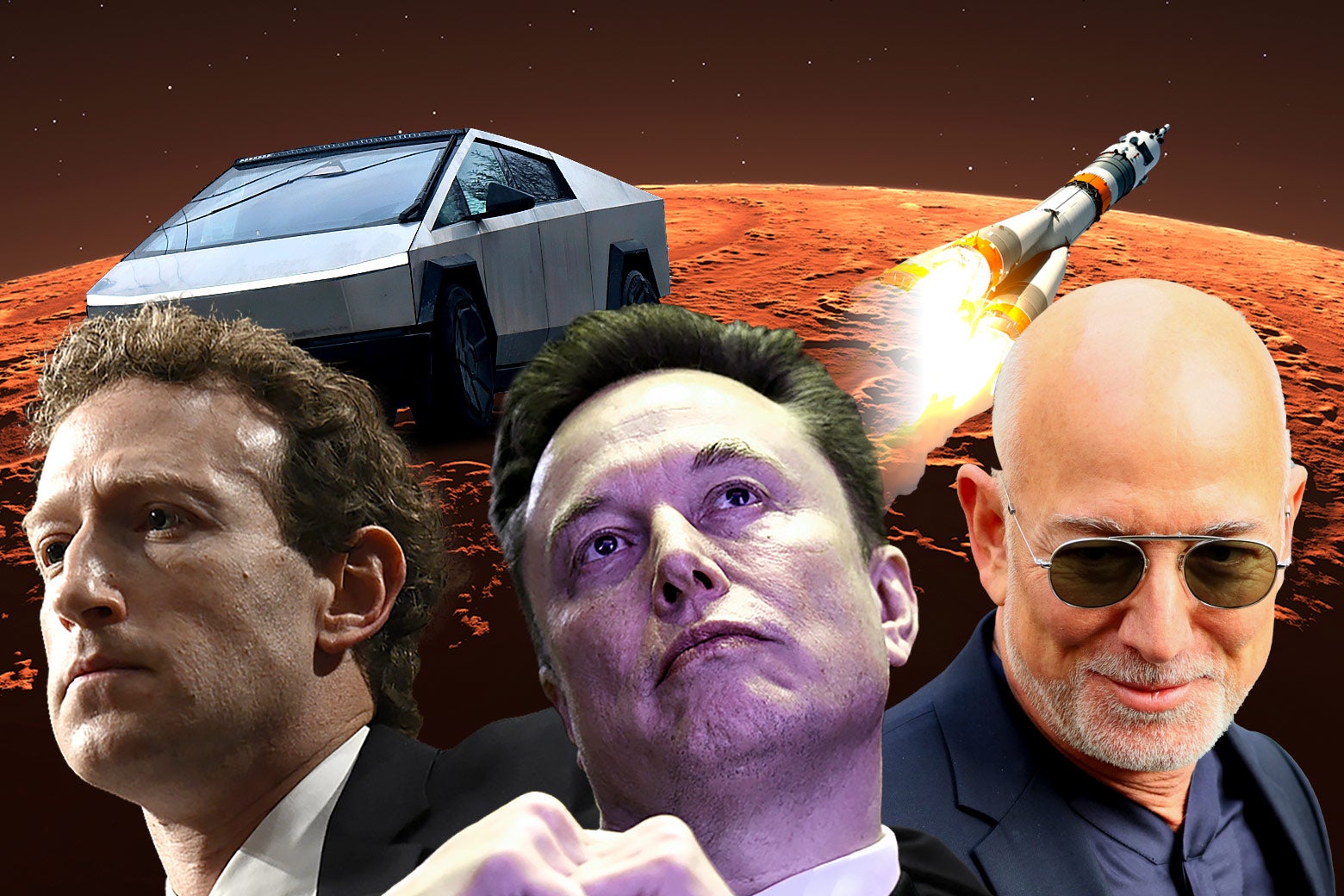
Why are these moguls—men whom the business media have been praising as geniuses for the past 40 years—so dumb? Musk may very well be the dimmest of the lot in this department. He described the armored Cybertruck as “what Bladerunner would have driven” even though “blade runner” is a job description and not a character, and, as Max Read has written, the hero of the 1982 Ridley Scott movie, Rick Deckard, spends all of Blade Runner recognizing that his work is soul-crushing and inexcusable, even in the context of the urban hellscape he inhabits. “You don’t need the truck that ‘Bladerunner [sic] would have driven,’ ” Read explains for the obtuse (which apparently includes Musk), “because you don’t live in the world of Blade Runner.”
You’d think that would be self-evident, but Silicon Valley persists in trying to realize fictional inventions that are meant to be understood as terrible ideas, apparently just because they look cool. The industry that has been propelling the developed world into the future is dominated by the mentality of a 12-year-old boy. Science fiction has a long history of anticipating and even inspiring technological change, and the genre’s authors have at times been consulted by government—usually the military or security forces—to model potential threat scenarios and ways to respond to them. That work has presented its own moral conundrums, but at least they were the dilemmas of adults, not the overgrown manchildren shaping so much of our daily lives.
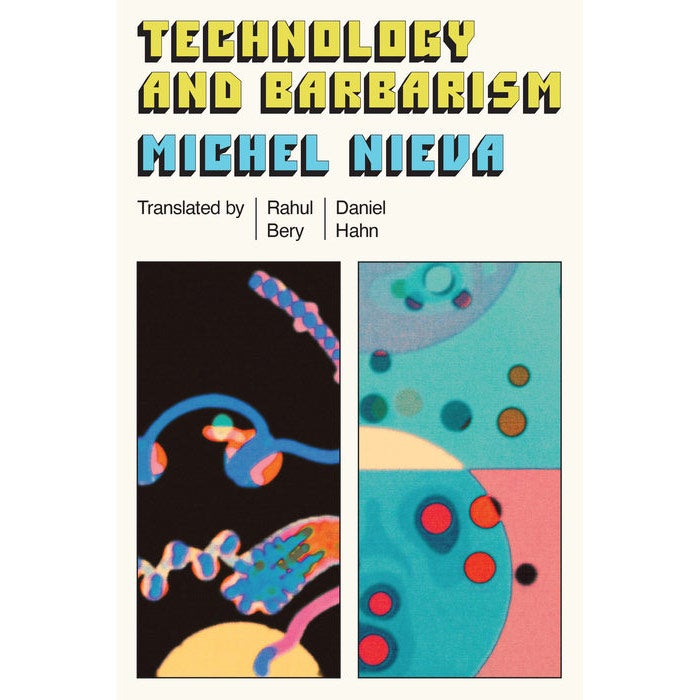
Argentinian novelist Michel Nieva is not distracted by the juvenile visions of tech moguls. In an essay translated by Rahul Bery and published in his recent book, Technology and Barbarism: or: How Billionaires Will Save Us From the End of the World, Nieva argues that cyberpunk’s pessimism about life on Earth has been repurposed by Musk as a justification for his pet project: establishing colonies on Mars. To Musk, Nieva writes, “the panacea for terrestrial problems is not to reduce the gulf between rich and poor or to halt the socio-environmental crisis that is driven by capitalism, but, rather, to transfer this system’s logic to another planet.” While mid-20th-century science-fiction authors typically portrayed interplanetary travel and settlements as government operations on behalf of the greater good, the crumbling societies envisioned by cyberpunk must cede such initiatives to business and its profit imperative.
For his own part, Jeff Bezos advocates not colonizing other planets but creating self-sustaining space settlements, after an idea posed by the physicist Gerard O’Neill in his 1976 book The High Frontier: Human Colonies in Space. Blue Origin, Bezos’ rocket company that famously took Katy Perry to space—you can’t help viewing this as a riposte to Musk’s SpaceX and Mars ambitions—is working on creating a technological “gateway” to enable such settlements. The plan is for a real-life version of the luxury space station in the 2013 movie Elysium, but Bezos avoids mentioning an awkward truth that the film foregrounds: Only a privileged few will get to live in such arks, while the majority of humans will be stuck on our devastated home planet, if we’re lucky and aren’t just wiped out in some catastrophe.
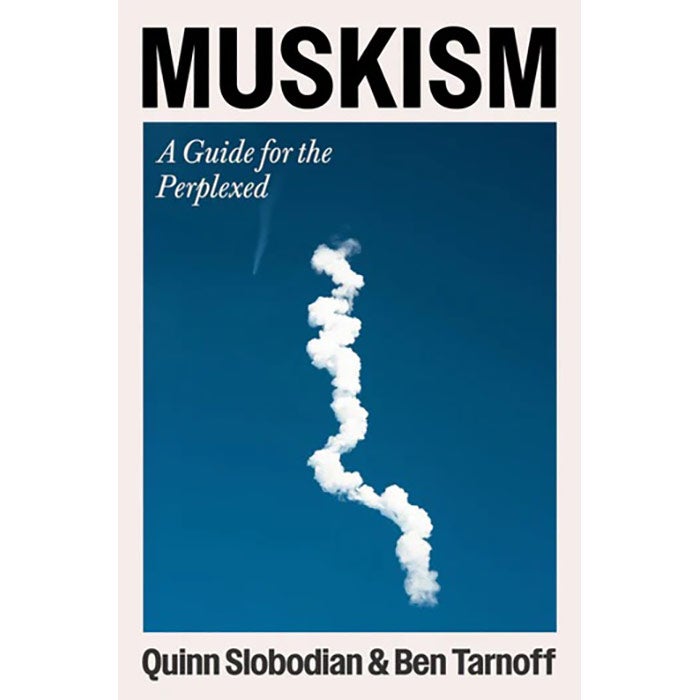
Nieva wrote the essay “Capitalist Science Fiction,” the only piece on this subject in his book, to express “my puzzlement as a reader at finding that my favorite literary genre, science fiction, should have been transformed into one of the mythological engines of contemporary capitalism.” Yet both science fiction and capitalism come in more varied forms than Nieva seems to realize in his vitriolic and sometimes muddled essay. In their new book Muskism: A Guide for the Perplexed, historian Quinn Slobodian and tech writer Ben Tarnoff dig into the mindset of Silicon Valley’s most gauche tycoon and touch on science fiction more tangentially, but their firmer grasp of just what flavor of capitalism Musk and his cohort represent sheds a brighter light on the topic.
Slate receives a commission when you purchase items using the links on this page. Thank you for your support.
Slobodian and Tarnoff, for example, believe that “Mars was never a serious exit plan” for Musk. His power and wealth, they argue, are built less on achievement than speculation, the belief that he is always about to produce some epochal breakthrough. Musk is, above all, a proponent of “deglobalization,” the retraction of national economies from global markets and an increasing reliance on controlling entire supply chains, which is how Musk himself structures his factories. He “does not just sell cars, rockets, or satellites,” Slobodian and Tarnoff write. “He sells the fantasy that, in an increasingly unstable world, both states and individuals can fortify their self-reliance by plugging into his infrastructures.” They call this “fortress futurism.”
Many of the ideas that tech barons pluck out of science-fiction novels feed into this fantasy of control and the elimination of the unpredictable. The extraterrestrial colony liberated from government regulations (though amply funded with taxpayer dollars, to judge by Musk’s past ventures), the terrarium-like O’Neill cylinders floating through space, the solipsistic virtual reality and A.I. relationships that shield their users from encounters with real people in the real world, the armored car that asserts your power and invulnerability on the street—these are all visions of life in a self-contained capsule. The prototype for all of these dreams of total self-reliance is the spaceship, that enduring science-fiction motif.
In much of science fiction, the spaceship has served as a vessel for adventure and discovery. But in fortress futurism it represents a retreat to a womblike existence in which the main character gets to pick and choose from what he likes about the current world—robots, some simulation of hot women, cool space suits (Nieva notes that Musk hired a Hollywood costume designer to create SpaceX gear that “emphasizes its wearer’s biceps and pectorals”), liquid meal replacements, etc. Everything else, including the wayward needs and desires of other people, will be blissfully eliminated.
For people who claim to champion disruption and creativity, tech barons seem intent on eliminating any inconvenience and unpredictability from their lives, along with all the unexpected experiences that lead to fresh ideas. Is it any wonder, then, that when it comes to the books they claim to love, these people have become experts at surgically extracting the bits they find pleasing and discarding anything they don’t want to hear? Science-fiction authors can issue all the warnings they want. In Silicon Valley, they will always fall on deaf ears.