Sign up for the Slatest to get the most insightful analysis, criticism, and advice out there, delivered to your inbox daily.
Every time Elizabeth looked at her daughter, all she saw was her late fiancé. He had died in an avalanche while skiing in the Colorado backcountry when she was just a baby. The tragedy had plunged Elizabeth (identified in this story by first name only) into single parenthood, changing diapers, making meals, doing the bedtime routine all by herself, all while trying to bring in what money she could as a massage therapist. She struggled to find a place to live that felt like home: She moved with her daughter 15 times in just six years. By then, Elizabeth was so stressed that she was smoking weed to get to sleep, and she knew that it was only a matter of time until her daughter noticed how traumatized her mother was. Seeing pieces of her fiancé in her daughter’s face could trigger “the most acute pain I’ve ever been in,” Elizabeth told me. “I knew that I had to figure it out. I was gonna get my shit together. My kid depended on it.”
A friend recommended she see a psychiatrist named Craig Heacock. Heacock and Elizabeth had an instant bond. He diagnosed her with post-traumatic stress disorder and determined that while Elizabeth’s symptoms had been brought on by her fiancé’s death, her foundational trauma came from her childhood. Elizabeth grew up the only daughter in a strict, conservative family with an angry, volatile father and a mother who sat idly by as he raged at her and her four brothers. She’d moved out at 17, and she became estranged from her parents at 20, after they learned she’d had sex before marriage. Heacock suggested that Elizabeth apply to join a clinical trial investigating the use of MDMA in treating PTSD. The trial was run by a company now called Lykos. (At the time, it was known as MAPS PBC, the for-profit arm of a nonprofit organization called the Multidisciplinary Association for Psychedelic Studies.) After months of screening, Elizabeth was accepted into the study. Taking MDMA in a scientific setting involves a lot of careful procedures; they don’t just hand you the drugs and let you trip. Elizabeth first had to complete multiple prep sessions with Heacock and another therapist, Karen Cooper. Then, Elizabeth would take the all-important pill. For eight hours, her vitals would be monitored, and she’d be flanked by the two therapists. She’d stay for overnight monitoring, followed by therapy in the morning to unpack the MDMA experience. In total, Elizabeth would take three pills over three months.
During that first “dosing session,” as they are called, Elizabeth was nervous but hopeful. “There was no question that this was going to be it for me,” she told me. “I had decided in my head that this was going to fucking work.”
After Elizabeth swallowed the pill, she, Heacock, and Cooper all giggled nervously and began to wait for something to happen. About 35 minutes in, Elizabeth’s vitals started spiking; her heart rate quickened, she grew hot, her pupils dilated, she began grinding her teeth. She’d done MDMA recreationally before, and she knew these were the usual side effects. Heacock and Cooper saw what was going on too. “We all started smiling,” Heacock said. He knew that the MDMA stood to really help her: “I was so happy for her.” During the second session, Elizabeth experienced another telltale symptom of MDMA use, gastrointestinal distress, or, as she puts it: “I was shitting my brains out.”
In the dosing sessions, which took place in 2019, Elizabeth let herself truly feel her sadness instead of turning away from it. The therapists had put on a soundtrack of calming ambient music, a common move when guiding a psychedelic trip. When a drum-heavy song came on, she thought of her late fiancé, who had been a drummer. Usually, she’d beat herself up for being sad; now she let herself cry. She realized that she needed to be kinder to herself and to accept that her grief was completely understandable for someone who’d lost a loved one. It’s easy for a therapist—or even just an inspirational quote from one on Instagram—to simply tell you those things. But MDMA, it seemed, really helped her internalize them. After a couple of sessions, she felt a cloud lift. By the end of the study, she could look at her daughter, at all the echoes of her fiancé in her face, and feel joy. The experience, Elizabeth says, saved her life.
You’ve probably heard a story like this; they’ve been everywhere in the news lately. Combat veterans struggling with PTSD and suicidality say MDMA has brought them back from the brink. High-profile athletes like Aaron Rodgers and Mike Tyson swear by powerful hallucinogens like ayahuasca and what some call “the toad” to reach the peak of their mental game. People in hospice report that psilocybin helped them find peace with their own mortality. Your mom saw an Oprah segment about the healing power of shrooms; your neighbor mentions microdosing in the same breath as joining a bouldering gym.
Researchers are now studying the potential of classic psychedelics like psilocybin and LSD, as well as other psychoactive drugs like MDMA and ketamine, to treat not only mental health issues but also ailments like irritable bowel syndrome, chronic pain, and migraines. Pharmaceutical companies are developing synthetic, bespoke versions of the drugs for therapeutic use, a line of research that many investors expect will yield the next billion-dollar drug. No longer just the purview of West Coast hippies, psychedelics are also being embraced by right-wing politicians. “This is the cause I will dedicate the rest of my life to fighting for, because too many lives hang in the balance to do anything less,” former Texas Gov. Rick Perry wrote in a recent Washington Post op-ed. When I first started writing the psychedelics publication the Microdose in 2021, there was little coverage of the topic in traditional media sources like the Post, and publicly discussing your personal psychedelics use was still very much taboo—but, five years later, cultural attitudes have transformed. The narrative around psychedelics has shifted away from hippies and toward the promise of healing and wellness.
Yet they are still not a formally sanctioned part of the medical system: Imagine going to the doctor for PTSD and leaving with a prescription for MDMA, which will be covered by your insurance. In order for this to happen, psychedelics need to be approved by the Food and Drug Administration—none currently are—which requires clinical studies demonstrating their effectiveness. Research scientists examining how, exactly, these drugs work have not reached a consensus. Some neuroscientists believe that psychedelics like psilocybin and LSD disrupt the brain’s default mode network, the constellation of brain patterns that are at work when you’re at rest and zoned out. But the data linking psychedelics to DMN disruption are mixed, and more importantly, it’s not yet clear how DMN disruption would then in turn change human behavior. (Some theorize it could represent a “shaking up” of your brain’s usual habits—a tidy story, but not yet empirically borne out.) Some neuroscientists have found evidence that psychedelics can increase neuroplasticity—but other neuroscientists have pointed out that, actually, a lot of things do, and that increased neuroplasticity isn’t necessarily noteworthy or beneficial to mental health.
Elizabeth, it would seem, was on the bleeding edge of a new kind of therapy. Perhaps her data would help such a drug be approved. MDMA, after all, had helped her recover from incredible trauma.
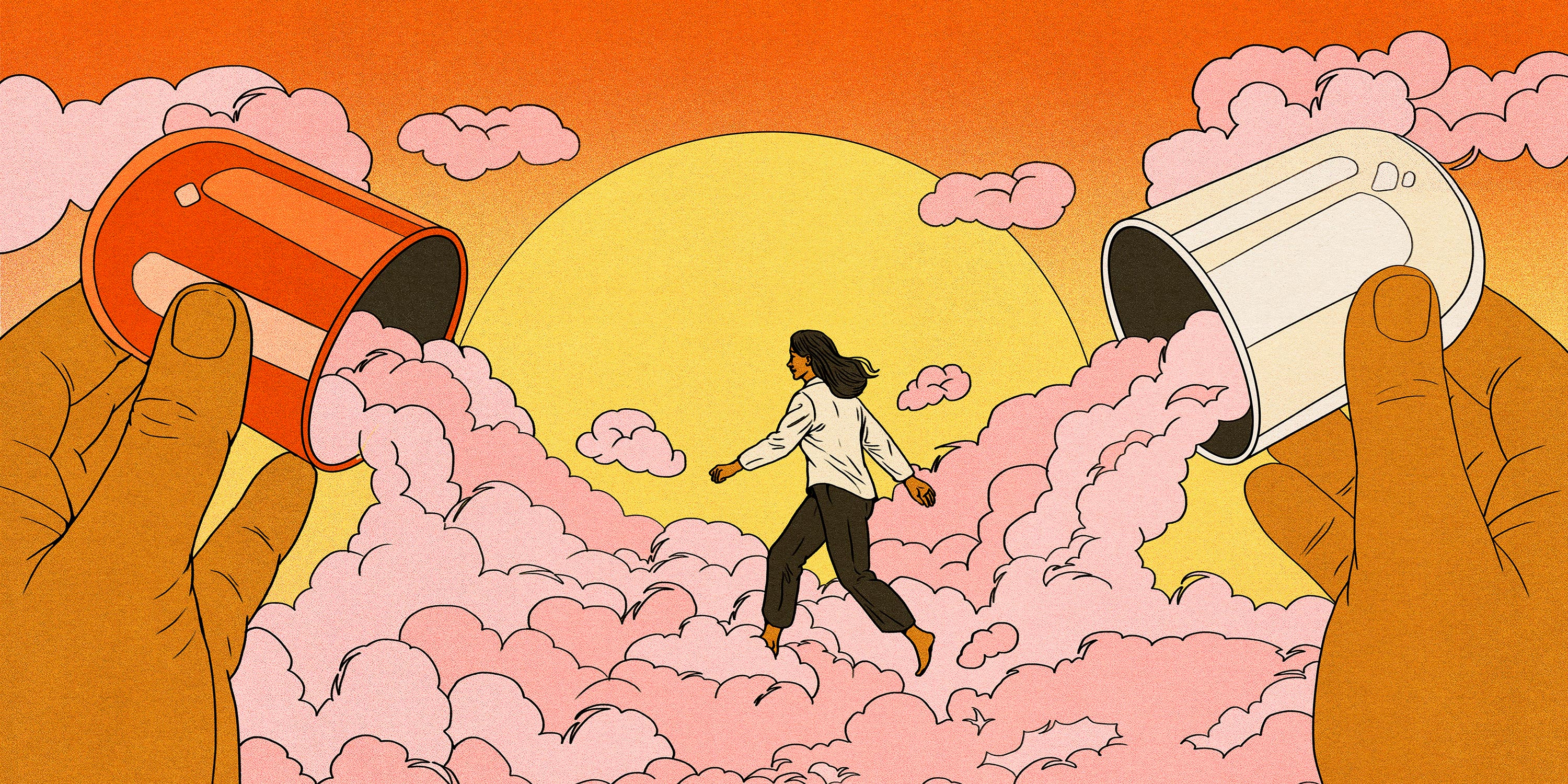
Or so she thought. But months after their last session, Heacock texted Elizabeth: “Can we talk?” He told her they needed to have a three-way conversation with Cooper. Oh, God, am I in trouble? she wondered. When she hopped on a call with the two therapists, the news was the last thing she expected: Her doctors had just learned from MAPS that Elizabeth was in the clinical trial’s placebo arm. She hadn’t been tripping on MDMA at all. She had gotten a sugar pill.
Medicine used to be, essentially, treatment with nothing. “The normative history of medical treatment until relatively recently is the history of the placebo effect,” psychiatrist Arthur K. Shapiro wrote in 1959. For thousands of years, physicians prescribed patients anything and everything that might help them feel better. “Powdered stone worked. So did lizard’s blood and crocodile dung, and pig’s teeth and dolphin’s genitalia and frog’s sperm,” as psychologist Irving Kirsch later explained it. “Patients have been given just about every ingestible—though often indigestible—substance imaginable.” In 2000 B.C., physicians merely provided empathy and comfort, knowing that part of their power lay in their authority and attention. It was seen as not only socially acceptable but humane to prescribe placebos.
But in the 1950s, after details of the Nazis’ inhumane experimentation on concentration camp prisoners came to light, the medical profession took the opportunity to adopt stricter ethical standards that experts hoped would protect patients, even when they were participating in experiments run by well-meaning scientists. That included informed consent, as well as questioning the ethics of prescribing “nothing.” Physician Henry Knowles Beecher, who served as a medic in World War II, is the grandfather of placebo studies as we know them: As the story goes, a young Beecher ran out of morphine on the battlefield and took instead to soothing his patients with saline, which he determined worked just as well. That account is likely a tall tale, but Beecher’s 1955 paper “The Powerful Placebo” found that although a single dose of morphine provided pain relief to post-op patients at a rate of about 80 percent, up to 50 percent of patients given saline felt better too. When he dug into other papers, he concluded that placebos were, on average, effective about 35 percent of the time. “Many ‘effective’ drugs have power only a little greater than that of a placebo,” he wrote. “Many a drug has been extolled on the basis of clinical impression when the only power it had was that of a placebo.”
Scientists, jarred by Beecher’s findings, grew more invested in ruling out the possibility that a drug’s effects were due to placebo. The U.S. Food and Drug Administration began requiring companies to show a drug’s efficacy compared to placebo as part of the drug-approval process. Historically, FDA approval has signaled to consumers that companies have done their due diligence in testing the drug, and that authorities have deemed it reasonably safe and effective. Insurance won’t typically cover therapies that are not FDA approved. It’s especially crucial for drugs like psilocybin or MDMA, which are classified as Schedule 1 by the Drug Enforcement Administration: It’s federally illegal to possess them, let alone to grow, manufacture, or sell them, so consumers have few legal methods available to obtain them. (What about ketamine? Ketamine is not technically a psychedelic, and the drug is classified as Schedule 3 for use as an anesthetic. Clinics or mail-order ketamine operations use off-label prescriptions for the drug.) In short, many see FDA approval for psychedelics as key to making them more widely accessible.
Today double-blind placebo-controlled trials are the gold standard in the FDA approval process: Participants are given either a drug or something that looks like one. Neither the patient nor the clinician working with them knows whether the treatment is “real,” since a clinician aware that they’re handing out a sugar pill might unwittingly treat participants differently.
Many studies with psychedelics have a placebo arm but don’t do much else to try to blind participants. There’s a single-panel comic by the artist Paul Noth that pokes fun at researchers’ meek attempts. It depicts 10 people in what looks like a staid therapist’s office, where five naked figures, à la Henri Matisse’s Dance, form a circle, holding hands and contorting their bodies in primal movement. The other five sit fully dressed on couches; one has her arms crossed, and another has a magazine in her lap. “So I’m guessing we’re in the placebo group,” the caption reads.
Some participants I talked to who were in the placebo condition of MDMA clinical trials reported being in a sad version of that comic; they quickly realized they’d been given nothing, and then deep disappointment set in. “I remember laying on the couch and just sobbing,” said Sehrish Sayani, who participated in an MDMA trial in 2022. “I just went to the darkest place,” said Kathy Neustadt, who received a placebo as part of a 2021 trial. She compared the pain she endured to the grief she felt after experiencing a stillbirth. That pain is often referred to as the nocebo effect. It’s the other side of the placebo coin, where expectations can make your symptoms worse. When participants like Sayani and Neustadt enroll in trials, they spend months just in the screening process, in hopes that a drug will help them, so getting nothing can worsen existing symptoms—or introduce new ones.
These realities make it very difficult to tell if psychedelics work any better than placebos—and, in turn, very difficult to get FDA approval. Because in the case of psychedelics, how could a double-blind placebo-controlled trial possibly work?
In 2019, Stanford University anesthesiologist Boris Heifets and his colleagues began the most ironclad blinded study yet attempted in the psychedelics world. They asked: Does ketamine, a psychedelics-adjacent drug found to help depression symptoms, work even if you’re unconscious? The researchers recruited 40 people with moderate depression who were about to undergo elective surgery and gave them either ketamine or a saline drip while they were already fully under anesthesia. Mental health can take a nosedive after major surgery—managing post-op pain, needing help from others, and thinking more than usual about health and mortality can hit people hard, even those with no history of depression—so the scientists thought that, if anything, the patients who were already somewhat depressed were unlikely to feel better after an operation. If ketamine’s antidepressant effect owed to, say, inducing neuroplasticity, the drug should still work even if participants were unconscious. Plus, giving participants ketamine while they were out cold would completely remove any possibility that the patients could guess which condition they were in. Heifets and his colleagues hypothesized that participants who got ketamine would end up less depressed than those who got placebo.
As Heifets interviewed patients following their surgeries—participants had undergone a range of procedures, from gynecological to plastic to spinal operations—he was moved by the stories they told him. It wasn’t just that the intervention had helped prevent a postsurgical plunge in mental health; many said they felt better than they had in a long time. One study participant told Heifets they wanted to reach out to old friends they hadn’t spoken to in years. “All I could think to myself was: I want to bottle this and give it to everyone else in this hospital,” Heifets said.
But to Heifets’ surprise, many of the patients who reported improved mental health hadn’t received ketamine after all. Both the ketamine and placebo groups showed huge improvements in their presurgical depression symptoms: Three days after their surgery, 40 percent of people in the placebo group scored well enough on a standard mental health questionnaire to qualify as in remission from depressive symptoms. Those results are on par with the changes in headline-grabbing psilocybin studies. “When I look back at what some of these participants wrote, of course, they never thought it was placebo,” Heifets said. “These folks were telling us: ‘Something really happened!’ ”
It was likely that something did really happen. In the days of Beecher, we thought placebo was just in people’s heads—i.e., not a real thing. But we know now that placebo produces very real physical effects. Decades of science since those days of placebo panic suggest that beliefs can manifest physical change; after all, the mind and body are connected. Researchers in the late 1970s found that after patients had their molars extracted, an IV saline drip provided pain relief through the body’s natural ability to produce endorphins. (The concept of endorphins was still extremely new then; they were discovered in 1973.) Endorphins are among several types of “endogenous opioids”—your body’s natural painkillers. Endogenous opioids act on the same receptors that synthetic opiates like morphine and heroin do, and when researchers gave these sad dental surgery patients naloxone, which blocked endorphins from binding to those opioid receptors, people suddenly felt much more pain. Since the ’70s, many other studies have confirmed that placebos can activate opioid receptors, as well as dopamine receptors, which are part of the body’s internal reward system. In other words, the anticipation or expectation of relief can, in itself, create relief when your body produces its own painkillers.
Perhaps those in the placebo condition in Heifets’ study were making their own opioids—having their own healing experience. Perhaps Elizabeth had been making her own opioids during her clinical trial sessions too. “I would’ve bet my life savings that I had actual drugs running through my system,” she told me. Elizabeth and her therapists had known it was possible she would be assigned to the placebo group—the clinical trial she was in had a double-blind placebo arm; the study’s sponsors were collecting data they eventually planned to use in an FDA drug application. But her symptoms in that first session made everyone in the room so sure she had gotten MDMA that they never looked back—until it was revealed she’d gotten placebo after all. Just as Heifets’ participants said that something really happened to them, psychiatrist Heacock said the same thing of Elizabeth’s experience: “She got placebo, but I believe she had the neurochemical, physiological experience of an MDMA experience.”
Again and again, thinking you’ve taken a psychedelic has proved to have powerful effects—and it helps if scientists really try to sell the placebo as the real thing. In the 2006 study credited for reviving psychedelics research after decades of relative dormancy following Richard Nixon’s war on drugs, some participants received methylphenidate (aka Ritalin) as a placebo for psilocybin and mistook it for the psychedelic; 25 percent said they’d had a personally meaningful experience of the kind that comes about only “once every 5 years” or more. A 2021 study gave people at an ayahuasca retreat either actual ayahuasca or a carefully constructed placebo designed to mimic the taste of ayahuasca. Overall, participants reported that their symptoms of depression, stress, and anxiety decreased, with no meaningful differences between people who got ayahuasca vs. the placebo.
In 2020, University of Toronto Mississauga psychologist Jay Olson published what must be the funniest psychedelics study to date: He convinced a bunch of sober undergrads that they were high on psychedelics. The scientists gave each participant a pill, then had the group of them hang out in a big room staged to look like a chill party, with low lights, trippy paintings, beanbag chairs, a book by Timothy Leary set on a meditation cushion on the floor, and a DJ playing ambient music. The study employed nearly a dozen confederates—people who were in on the researchers’ gambit—to further sell the illusion: A psychiatrist and more than half a dozen researchers donned lab coats and hovered at the edges of the party, an arrangement suggesting that they were supervising the high undergrads. The room even featured a (fake) security guard. Olson and his colleagues trained other confederates to basically seem high; one such confederate with naturally large pupils just went up to people, saying, “Hey, your pupils are huge—are mine like that?”
Sixty-one percent of participants reported feeling something—seeing colors moving, getting a slight headache, feeling “very, very relaxed,” or experiencing “waves” of the high. One reported they were having trouble understanding what others were saying, and another said exactly what you’d think a high guy lounging in a beanbag chair would say: “The way we live is too active … too fast for me.”
Participants filled out questionnaires measuring their mood and their ratings of altered states of consciousness. In the paper he published about the study, Olson reported that some participants’ responses reported changes that were “greater than those associated with ingesting moderate or high doses of psilocybin.” All from fanfare alone!
It did not surprise me to learn that Olson had spent much of his life performing magic and was highly practiced at creating illusions. When I spoke to him in 2024 about his study, he called this method the Swiss-cheese model of deception: “Every slice of Swiss is a layer, and in every layer there are holes,” he said. “If there are too few layers, these holes can line up and people can see through the deception, but magicians stack really subtle layers of deception on top of each other so no holes are exposed. They can make people believe in all sorts of things, and sometimes the deception starts well before the magic show starts.” Like Olson’s study, psychedelics clinical trials are a bit of a magic show too, with several of the same elements: the psychiatrists projecting authority; the study room with comfortable seating, soft lighting, eyeshades, soothing music. There are hints to how you’re supposed to feel, and many people who participate have had experience with the drug before. There are the connotations of ritual, whether that’s taking a pill from a doctor in a white coat or participating in the ceremony before drinking ayahuasca with a shaman. Now there are all those news articles on people who have had their lives changed by the very drug you are there to ingest, how it’s sure to change your life. Belief begets more belief.
Then there’s the fact that the vast majority of psychedelics studies have paired the drugs with therapy. This burgeoning field has borrowed many of its methodologies from underground psychedelics practices, where it’s common for a therapist, a guide, a shaman, or, at the very least, a tripsitter to accompany people. But anyone who’s been to therapy will understand why that’s a terrible fit for clinical research: There’s no way to standardize the real-time interactions between a patient and a therapist—and doing so might compromise any sense of feeling seen or heard. Plus, there’s a huge range of approaches a therapist could use. (And while we’re talking about placebos, whether psychotherapy itself is one giant placebo effect remains an open question.) To get around this fact, some psychedelics companies have designed studies to offer only “psychological support.” They provide few details about what that actually entails but do insist it’s not therapy. I asked University of California, San Francisco researcher Balázs Szigeti what the line might be between “support” and therapy: “Maybe you’re only allowed to talk about your relationship with your father, but not your mother?” he joked.
Further, it’s well known that the “patient-therapist alliance” is a huge part of making therapy itself work. Indeed, both Elizabeth and Heacock went out of their way to tell me how much they liked each other and credited their mutual trust and admiration as a factor in Elizabeth’s healing. I asked Heacock what he thought had propelled Elizabeth’s miraculous sugar-pill-driven recovery. “You could argue that the special sauce is safety or trust,” he said. “I would argue that it’s love.” Love, he went on, was an open-mindedness, a desire to know someone and witness them—a parental kind of love.
Elizabeth was one of 37 participants in her MDMA study who sat through all three placebo sessions. Of that group, 12 saw significant improvements in their PTSD symptoms. That means 32 percent of people who got a placebo felt better with no medication involved, compared to 67 percent of people who received actual MDMA. While the MDMA arm did see more improvement over the placebo condition, it’s noteworthy that many participants also experienced improvement from just a sugar pill. Participants in the placebo arm received the same monitoring and follow-up as the treatment arm, but there were no researchers trying to actively convince them that they were tripping, as in Olson’s experiment. Perhaps Heacock was right, and Elizabeth’s improvement was due in part to the love and safety she felt from her therapists, and in part to the extent to which she wanted the treatment to work—had, in fact, decided it would work. And perhaps those other 11 experienced some version of that too.
In search of a more measurable (and perhaps easily replicable) variable, I asked Heifets what he thought was driving the placebo effect in these experiments. Like Elizabeth, he gave a squishy answer: hope. Heifets’ theory is that any capital-B Big Life Experience is a potential catalyst for hope. People who have been in serious car accidents or who have had heart attacks often point to those moments as ones that encouraged them to reevaluate their lives, to appreciate the fact that they’d been given more time; while the tragedy itself might not produce hope, the experience of moving through the recovery process, of finding small things to wish for, of feeling grateful for another shot at life can. There are ways to produce such experiences, Heifets says—jumping out of a plane, being chased by a lion, surviving a bank robbery—but it’s much easier to plan to take psychedelics, and they reliably create that Big Experience that generates hope. “I don’t think there’s anything terribly specific about how psychedelics work, and I’d wager there isn’t a big difference between the therapeutic potential of ayahuasca, psilocybin, and ibogaine,” he said. “If there were a drug that could improve your likelihood of feeling hope again, that’s a real drug! What if we thought about psychedelics that way?” You take a pill, drink a brew, swallow a tab. You hope. And you don’t do it alone. In many ways, the pharma-focused psychedelics movement is just reinventing the wheel that West Coast hippies have been spinning since the 1960s, and many Indigenous communities for centuries before them.
The problem? Hope is not a drug you can sell. Love is impossible to quantify scientifically. Part of the beauty and profundity of people’s psychedelic experiences is the ineffable—but the systems that run on Western science are hungry for hard data, replicable and reliable outcomes, and, perhaps most importantly, profit. To sell a drug, you have to have FDA approval. And the FDA is in the business of analyzing a drug’s efficacy compared to placebo, not of investigating how to amplify placebo effects. The FDA wants something firmly new.
Stories like Elizabeth’s incredible sugar-pill recovery—while wonderful news for both Elizabeth and humanity—complicate the narrative most psychedelics companies are selling to the FDA: that their drugs, not participants’ expectations of what their drugs should do, drive healing. Lykos, the company behind Elizabeth’s clinical trial, tried and failed in the summer of 2024 to get MDMA approved as a drug to treat PTSD. The issues went beyond the placebo effect. In the broader conversation around the study, this very magazine ran an explainer on the trial and deemed it, overall, to be “shoddy science.” Then there’s the fact that the mode of therapy may have, some claim, been a factor in the alleged sexual abuse of one participant and her clinical trial therapists. Many of the FDA’s criticisms centered on the study’s design; in particular, the agency raised concerns that the study did not measure participants’ expectations. Did other participants, like Elizabeth, feel sure that the trial would heal them? If so, that kind of expectation could shape the results. Further, the FDA raised concerns that over 40 percent of people in the study had taken MDMA before—that, the regulators argued, could increase the chances that participants could tell whether they’d gotten the drug or a placebo, which, in turn, could have an effect on their expectations. Elizabeth hadn’t guessed correctly, but had others?
Having spoken to Lykos clinical trial participants and therapists, MAPS and Lykos critics, and dozens of psychedelics researchers, I agree that there are holes in the trials’ methodology. But it’s also true that Lykos—and, really, any company developing psychedelics as pharmaceuticals—faces an uphill battle. Companies are attempting to quantify what is qualitative; the rigid system for studying medicine that arose in the aftermath of World War II, the system that allows for insurance to be billed, the system that allows doctors to hand buttoned-up skeptics a prescription and assure them that they are making a rational choice is fundamentally at odds with psychedelics’ meandering strangeness. The system that makes us think that medicine is a sure thing rather than what it really is, at least in part: a long tradition of practitioners just trying stuff. For millennia, practitioners did just try stuff, including psychedelics, but now we live in a time when that’s federally illegal and hard to do unless you get the FDA to sign on. And to do that, you have to downplay the contributions of expectation, of love, of hope, of therapy—the aspects of psychedelics that many long-term practitioners say give them power and promise.
Spooked by the FDA’s feedback on the Lykos trial, some manufacturers are leaning hard on the idea that it is the drug, not the therapy, that does most of the work in psychedelics-assisted therapy. Others are developing drugs that produce a businesslike hourlong trip, so you can be in and out of the clinic quickly; still others are working to remove the “trip” entirely, something that by Heifets’ estimation would eliminate the very thing that catalyzes hope. The drugs are still in early clinical trials for safety, so their efficacy is not yet known, but the idea is that you’d take a pill at home. Perhaps the act of being prescribed a medication and taking it would engender a different hope, one that might work about as well as any other placebo. (Fun fact: A “dirty little secret” is that a significant benefit of antidepressants like SSRIs are placebo as well.) But it also reduces overhead costs of therapists to tripsit, which makes investors happy. To create a profitable drug, you need the treatment to be as simple and scalable as possible—none of this touchy-feely stuff.
When I first started researching this piece, I wanted to adjudicate whether psychedelics were “merely” placebo. With all the hype around these new drugs, don’t patients deserve to know if a trip—which can be uncomfortable or even fatal—is actually doing something? But I think now that I was asking the wrong question. Placebo is something. And when it comes to healing, understanding the exact contribution to improvement is a fool’s errand. If it helps people, who am I to judge? Heacock, too, has let go of trying to understand exactly what helps his patients. “The longer I work, the more I have no idea what’s behind whether people get better: whether it’s because you have a girlfriend, because the days are getting longer, because you’re training for a 10K, because you got a better job, because your moon’s in Aquarius,” he said. “It’s what makes psychiatry so frustrating, but the mystery of it is what’s so fascinating.”
The truth is that all drugs are at least part placebo and—if they are indeed proven to outperform the placebo in clinical trials—part effectiveness. The question now is whether we can be honest about that and leverage the power of placebo to amplify whatever other effects a drug has. And the balance of that, says Szigeti, the UCSF researcher, doesn’t really matter in the end. “I have not met a single patient in my life who complained that their chronic back pain got better because of placebo. They care about getting better vs. not getting better.”
Count Elizabeth among those patients. When she learned she had been in the study’s placebo condition, she was first shocked, but then it hit her: “I’m fucking amazing,” she said. Realizing that she had been the one to heal herself was a major revelation—she didn’t need the MDMA. In fact, months later, when Elizabeth was given the opportunity to try MDMA through a follow-up study, she dropped out partway through; she hated the jittery feeling it gave her. “I didn’t have to have some outside substance to get me to a point where I can heal,” she said. “It’s a powerful feeling.”
Update, Feb. 2, 2026: Multiple names in this article have been updated to protect a source’s privacy.