Sign up for the Slatest to get the most insightful analysis, criticism, and advice out there, delivered to your inbox daily.
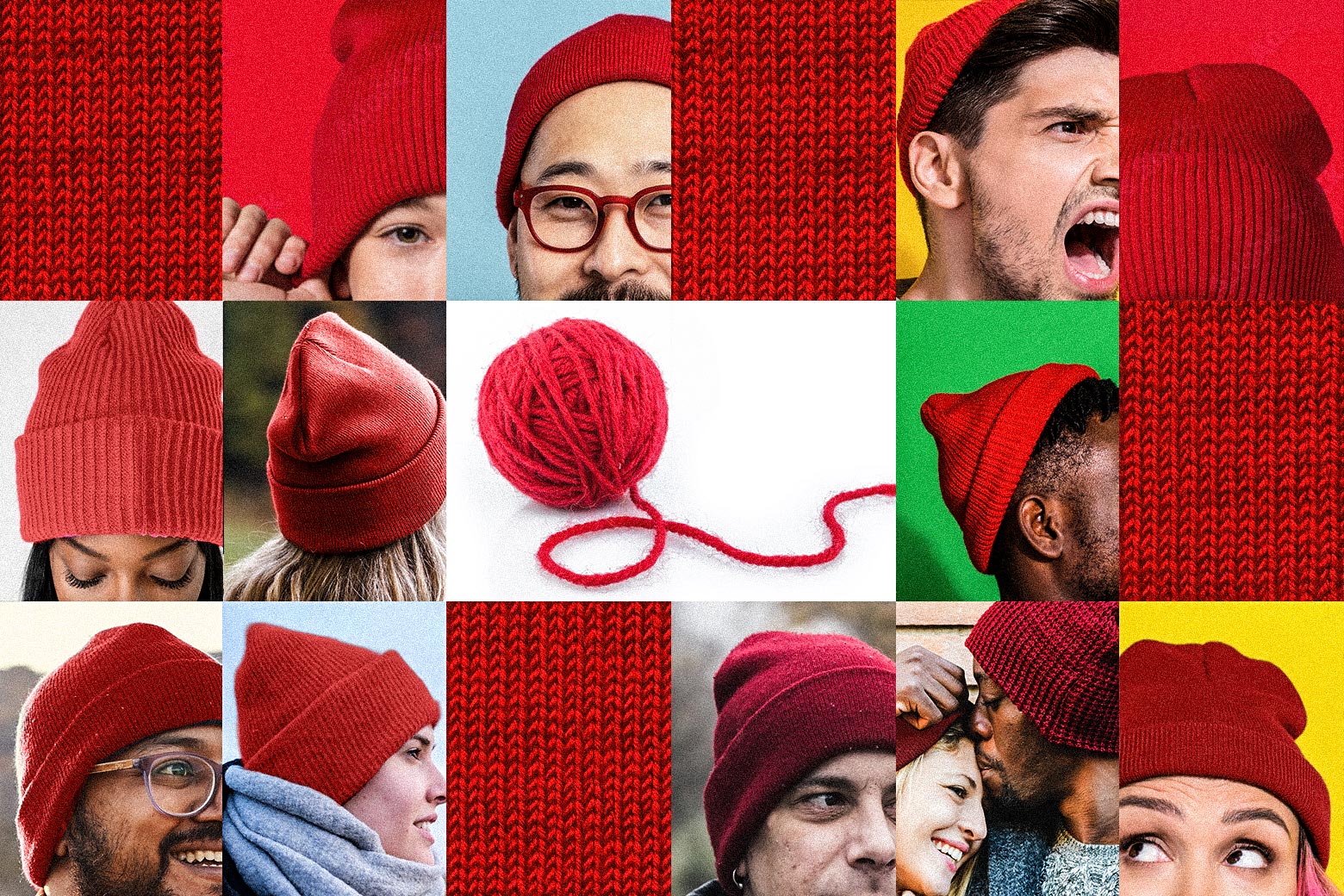
Something strange is happening in yarn stores across the U.S. Eat Sleep Knit, a yarn store in Dallas, Georgia, posted a photo on Tuesday of plastic tubs overflowing with skeins of scarlet and crimson and magenta—all from orders it had received over the past few days. Other yarn stores, like Starlight Knitting Society, in Portland, Oregon, posted assurances for worried customers: Yes, we have red yarn. But Needle and Skein, the yarn store in St. Louis Park, Minnesota, that had started all this, had only 10 skeins of red left when I called them on Wednesday, just days after the store had posted a little-known hat pattern that’s since activated knitters throughout the country, and the world.
All proceeds from the $5 “Melt The ICE” hat pattern, posted in response to Immigration and Customs Enforcement’s invasion of Minneapolis and murder of both Renee Good and Alex Pretti, go toward the St. Louis Park Emergency Program and Immigrant Rapid Response Fund. The pattern itself was inspired by the red hats worn by Norwegians in the 1940s as resistance to German Nazi occupation. It’s said that the Nazis banned the hand-knit caps in 1942, after which the hats went on to become an obscure quirk of history. In 2026 they found new life, however, when Needle and Skein owner Gilah Mashaal needed a project for the store’s Wednesday night knit-alongs. She wanted something similar to the pink pussy hats made in protest of Donald Trump’s first inauguration but more suited to this new era of horrors. It was an employee, Paul, who came across the Norwegian nisselue, and the team rushed to create, test, and publish the pattern in time for the next meeting.
It became “an absolute sensation,” Mashaal told me. To date, Needle and Skein has raised over $250,000 from the pattern, and posts about it have filled every corner of KnitTok and taken over crafting subreddits. “It means a tremendous amount, because so many people were feeling lost and in despair and not knowing what to do,” she continued. “This is a way for the crafting community to get together and love each other and show their support for our community that needs this help.”
Fiber arts like knitting, crocheting, and embroidery have never been completely apolitical. For example, quilting has long been a domestically appropriate medium for women to express their political beliefs, well before they had the right to vote. Even the American flag is a textile art. Today it remains a potent tool for political activism, and as fights over immigration enforcement have intensified, the online crafting community has returned to its political—and often radical—roots.
Hats in particular have become a common resistance craft because they can be quickly made and are highly visible. However, the red caps now trigger uneasy flashbacks to the most recent time fiber arts evolved into mass protest: the pussy hat—which, for some, has been tinged by accusations of a kind of cringe white feminism, as well as blind spots around race and trans inclusion. These criticisms often miss the fact that the hat was never supposed to represent human genitalia in the first place—it was supposed to look like a cat.
“Mine was lumpy and sparkly,” said Jayna Zweiman, co-founder of the Pussyhat Project. “If I had anything like that on my body, I would go to the doctor immediately.” But as the movement grew, new interpretations spread, transforming the pink hats into a Rorschach test for where you were in the zeitgeist.
Following the Pussyhat Project, Zweiman went on to found the Welcome Blanket project, which focuses on immigrants and refugees. Betsy Greer, author of Knitting for Good!: A Guide to Creating Personal, Social, and Political Change Stitch by Stitch, told me she believes that the “Melt the ICE” hat could serve as a similar catalyst.
“If you have never shown up in any way before, you have never made anything, you’ve never protested, you’ve never considered yourself an activist, if you let making a garment like [the red hat] change you in some way, then you’re like, ‘Hey, I can do this,’ ” she said. “ ‘Maybe I am an activist, or I can do activist things. Maybe next I’m gonna call my senators.’ ”
Cynics might say that a hat can feel meaningless in the shadow of the harm being done—but that was never the point. Greer argues that craftivism is about the conversation and support. “Someone sees your red hat and then they know that ‘Hey, I’m not alone in feeling like this,’ ” she explained.
It’s also important right now, especially for the people of Minnesota who remain in the center of a fierce and deadly assault on human rights. “It feels so dark out there,” Mashaal said. “And this is hopeful.”