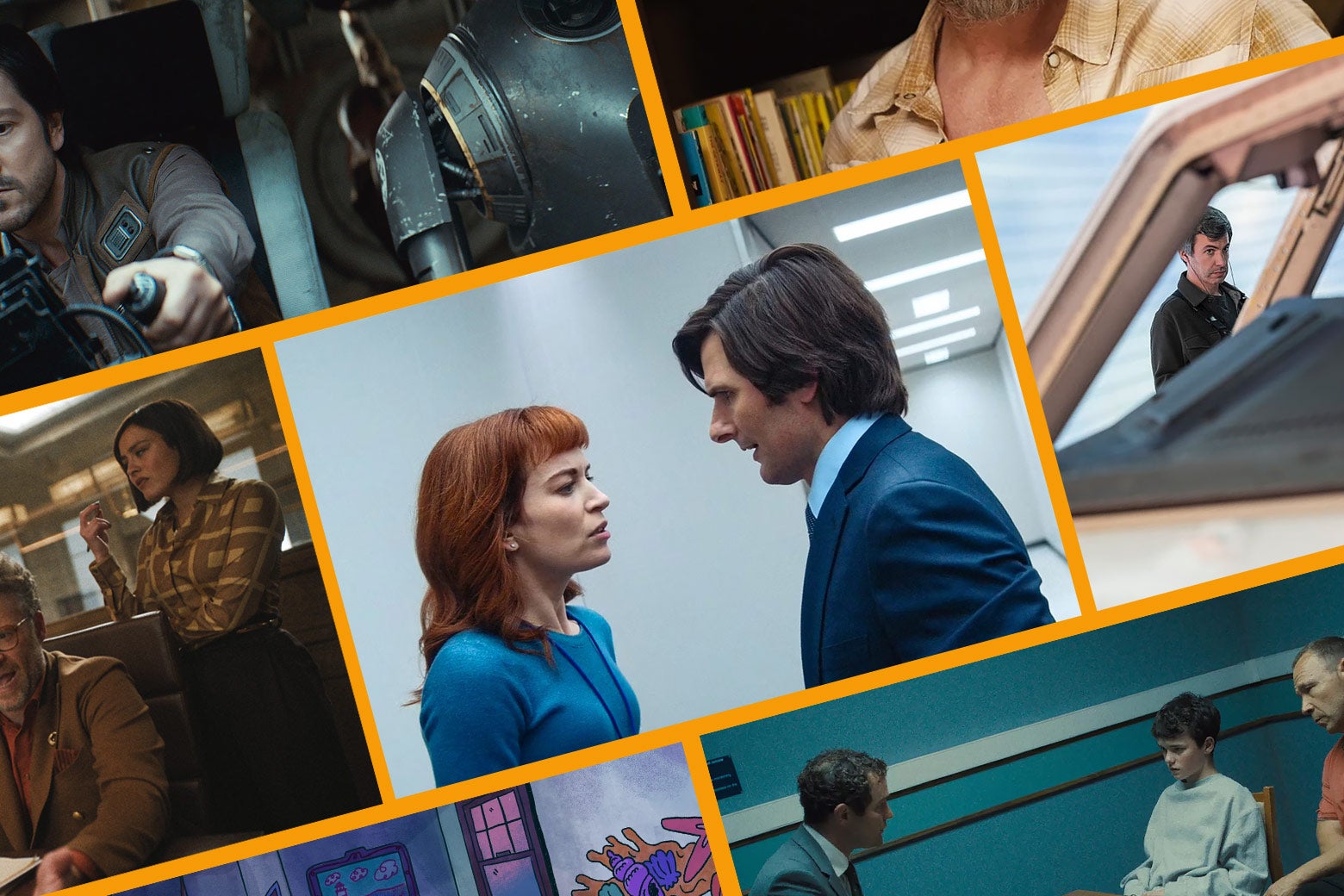
The Top 10
Adolescence
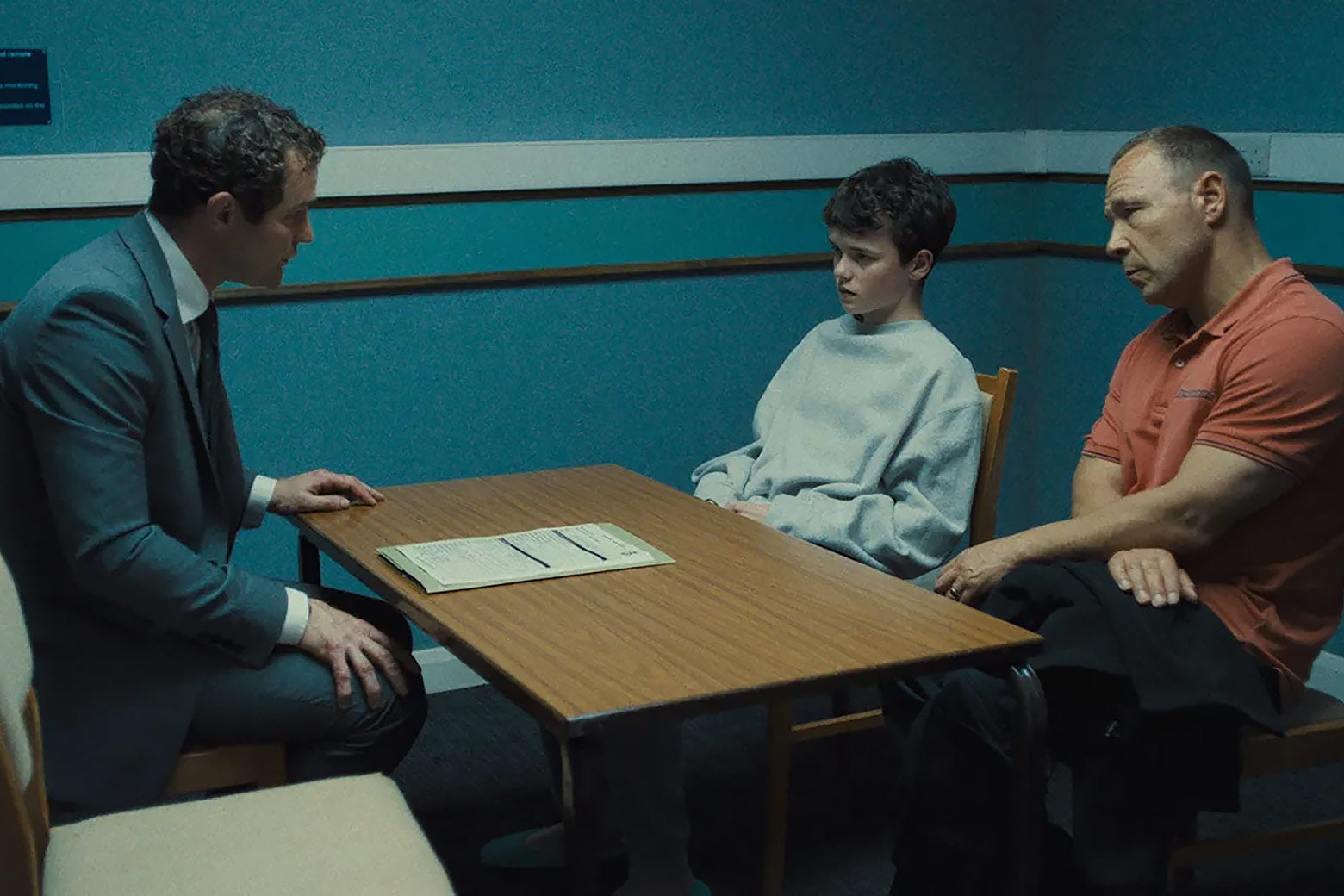
Is it possible, at this late date, to put aside all of the after-the-fact reaction to Adolescence—the four-part Netflix miniseries that won a ton of Emmys and prompted a cycle of worry about phones, boys, schools, and the manosphere—and just think about what a miracle this show was? In four hours, you come to care about so many characters: Stephen Graham as the devastated father, Ashley Walters as the debonair, befuddled detective inspector, Erin Doherty as the evenhanded, professional psychologist rattled by this one client. And, more than anything else, the rookie actor Owen Cooper as Jamie, the apple-cheeked tween who committed an awful crime whose gravity he barely seems to register. Once the show’s one-continuous-take episodes start to carry you along, you realize that the magic of Adolescence lies in making an utter nightmare—imagine that your kid killed a classmate, for reasons nobody, even he, can understand!—feel like a must-binge. And although the show has since become a teaching tool used to prompt conversation between adults and teens about the dangers of the internet, it’s actually not didactic. Just like Jamie’s parents, we viewers never really know why he did what he did. —Rebecca Onion
Streaming on Netflix.
The Pitt
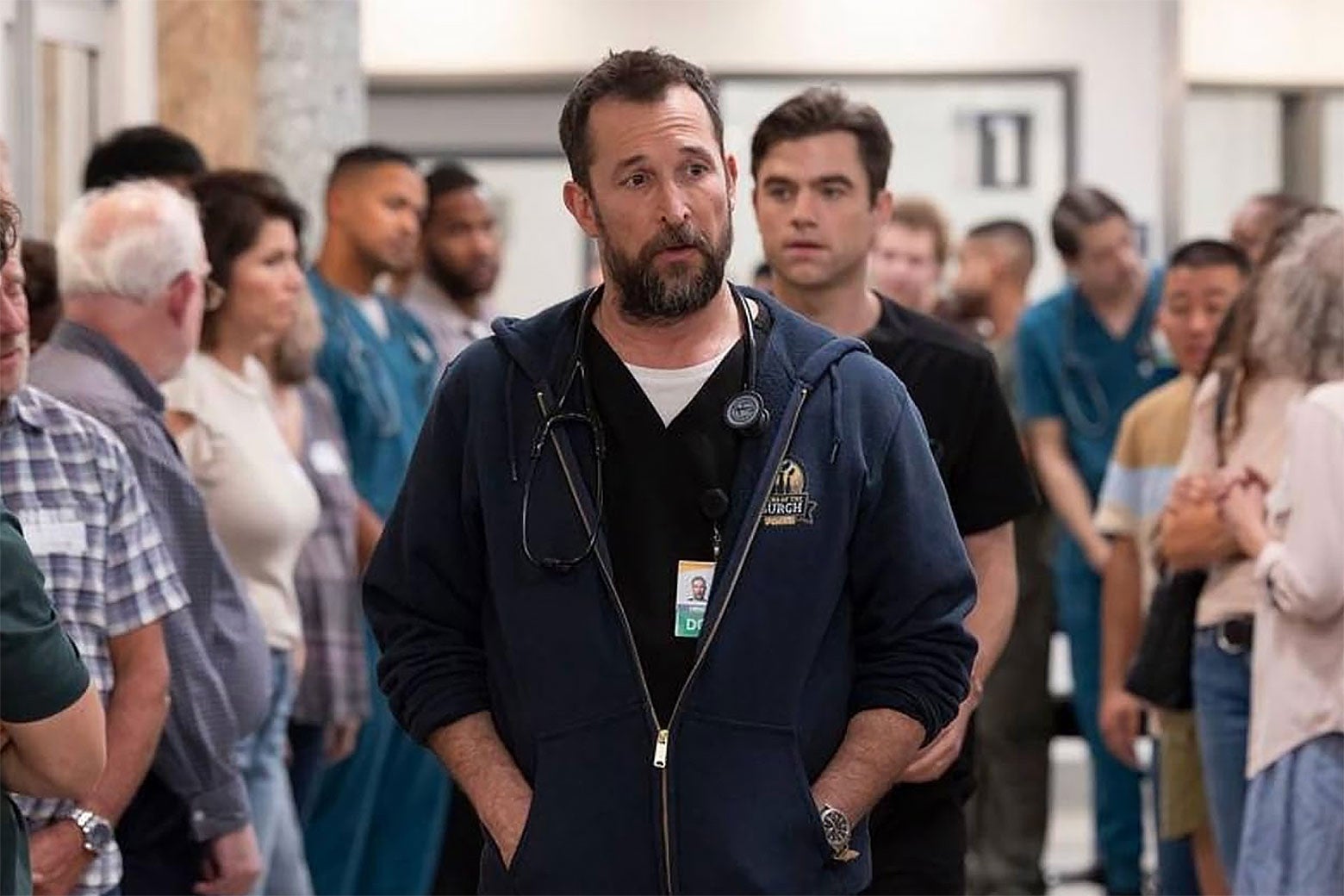
A decade and a half after NBC’s hit medical procedural ER ended, some of the drama’s key players—John Wells (executive producer), R. Scott Gemmill (writer), and Noah Wyle (lead actor)—decided that it was time to revisit the chaos of emergency medicine. Thus, The Pitt was born—but it diverged from its predecessor in several key ways. Namely, The Pitt is set in Pittsburgh, and its entire season takes place over the course of one ER shift, with an episode capturing each consecutive hour of the most stressful workday imaginable.
But the alchemy behind the series’ success goes beyond its format. The show has been praised for both its cast of characters—a gaggle of newbie students and residents on their first day at the Pittsburgh Trauma Medical Center, led by the lovable senior attending physician Dr. Robby (Wyle), who is suffering from COVID-era PTSD—and its accuracy. The Pitt refuses to shy away from true-to-life depictions of health care realities, from medical anomalies to responses to too-familiar traumatic events, like a mass shooting. This means that the series can be a hard watch, but it should be, given its mission to highlight how the concerns of the medical professionals saving our lives have deepened in the years since ER’s last shift. Just be grateful the writers pepper the strife with just enough relationship drama to keep you wondering what will happen when everyone clocks out for the day. —Nadira Goffe
Streaming on HBO Max.
The Studio
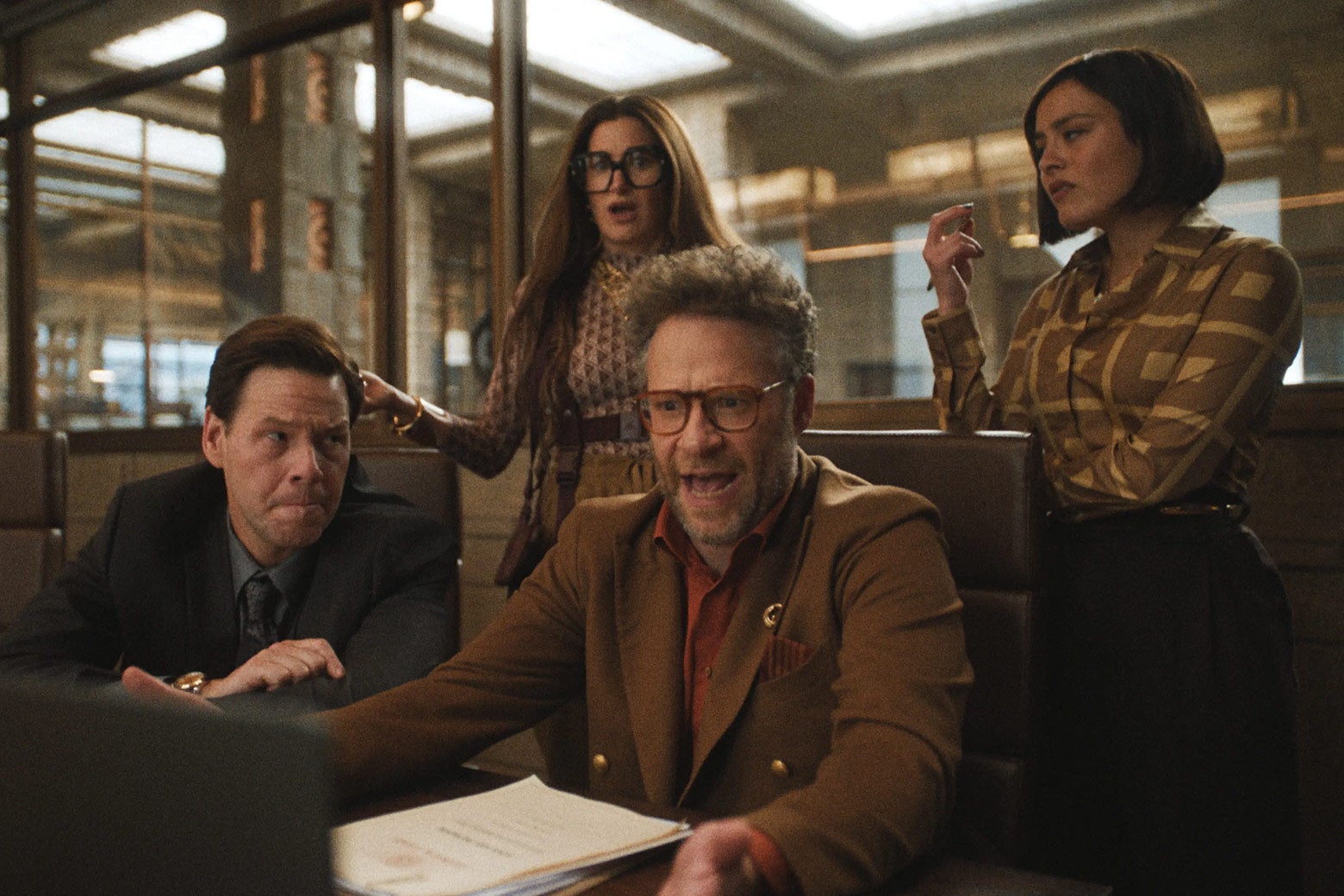
When, this fall, The Studio won 13 Emmys, the most ever for a comedy, let alone a comedy in its first season, the cynical take was that this was just Hollywood rewarding the show about Hollywood—Argo or The Artist all over again. But, as someone who laughed so hard at this Apple TV series that he frequently worried he was bothering the downstairs neighbors, I would offer an opposing view. After all, The Studio, co-created by, starring, and often co-directed by Seth Rogen, isn’t exactly the love letter to La-La Land that those movies are—or if it is, it’s written with a poison pen. More accurately, it’s a spiritual sequel to Robert Altman’s 1992 satire The Player, right down to the fact that the grizzled old studio exec played by Bryan Cranston has the same name as the unprincipled young studio exec played in that movie by Tim Robbins. It has the brainy, knowing, insider-y quality of Altman’s film, as well as its look-at-me long takes, but it’s simultaneously the kind of gag-filled spoof that’s unafraid to do a runner about a zombie movie in which the virus is spread via explosive diarrhea. (The zombie film is, of course, as Johnny Knoxville explains in one of the show’s many cameos, “a dark satire about medical disinformation.”) If you can’t stomach cringe comedy, then maybe it’s not for you. But for the rest of us, I could go on. Did I mention that it co-stars our era’s two great comedy Katherines, Kathryn Hahn and Catherine O’Hara? —Forrest Wickman
Streaming on Apple TV.
Andor
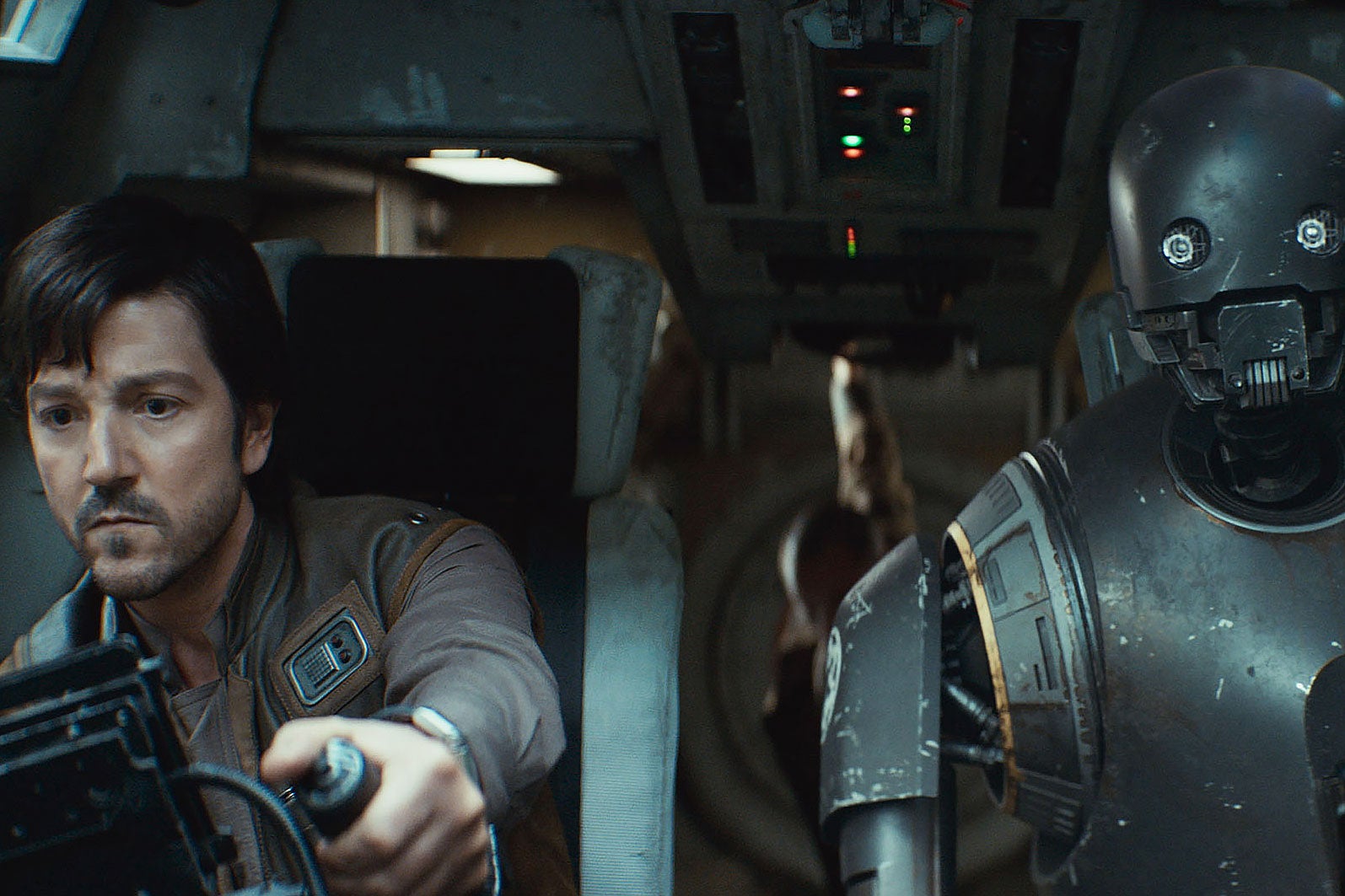
Tony Gilroy’s excellent first season of Disney’s most grown-up Star Wars title was enough to cement Andor as, in my opinion, one of the best television shows of all time. The second and final season, while slightly more bogged down by requisite Star Wars trappings, is nearly as good. This thrilling, heart-wrenching story of how a rebel is made and a revolution cultivated isn’t just thematically relevant in this current moment of politics we find ourselves in. It’s intrinsically, eternally human, drawing from a deep well of historical events and movements to capture the essence of what it means to live with hope and to fight for good, no matter the cost. (And it costs a lot, as the fates of many characters make clear.) There has never been a Stars Wars show like this; in all likelihood, there never will be again. —Jenny G. Zhang
Streaming on Disney+.
The Rehearsal
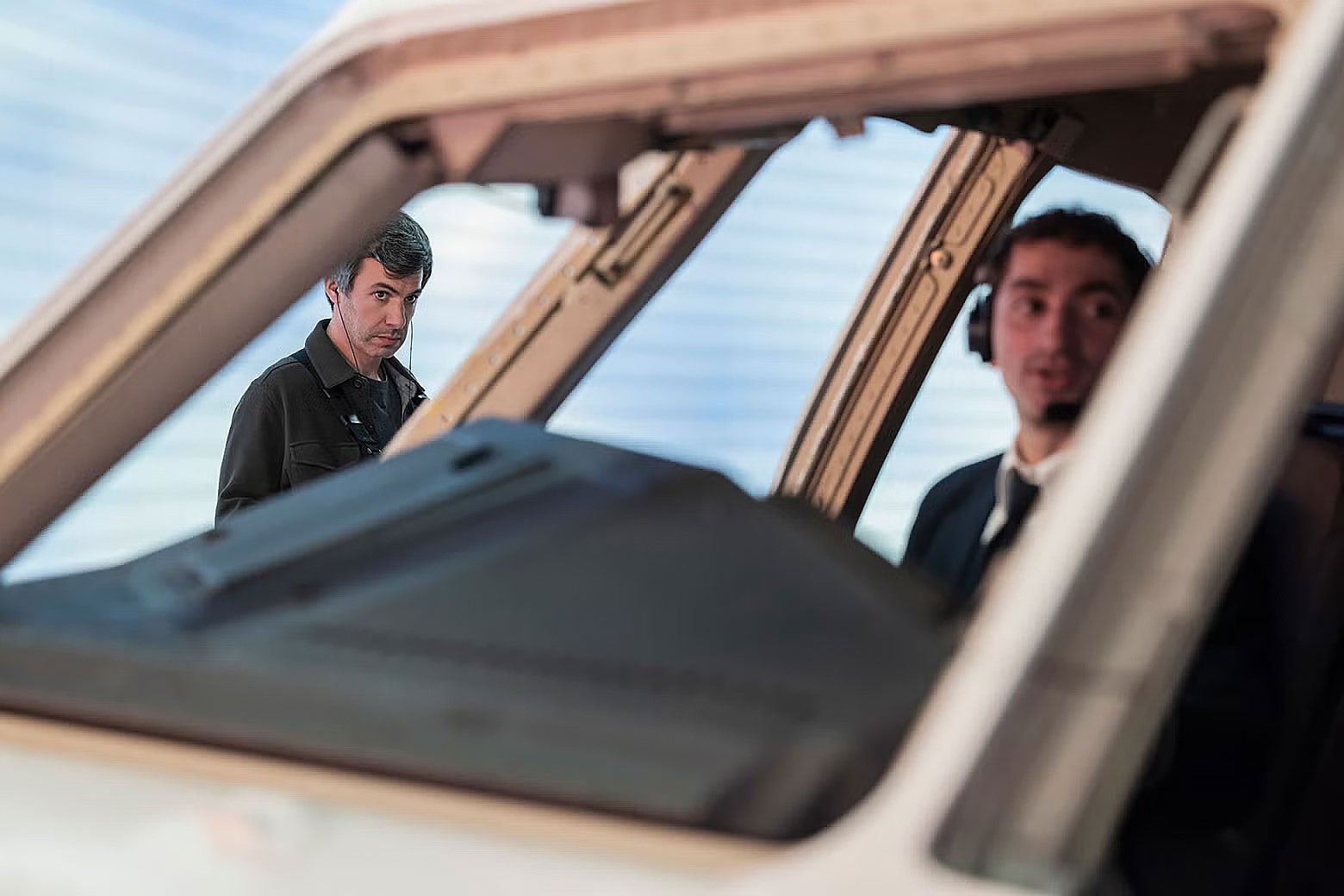
A second season of Nathan Fielder’s boundary-defying reality series didn’t seem like a bad idea so much as an impossible one—when you’ve inadvertently convinced a 6-year-old that you’re his surrogate father, what discomforts are left to explore? But Fielder brought the show back with a focus as unexpected as it was fruitful: plane crashes. More specifically, Fielder zeroed in on the way poor communication between crew members has been a major contributing factor to numerous fatal accidents, and suggested that if pilots and co-pilots could just spend a little time hanging out, we might all be a little safer in the air. Because this is Nathan Fielder, the process somehow involved a fake American Idol knockoff called Wings of Voice, the contents of Sully Sullenberger’s iPod, and the implication that Paramount is run by Nazis (then apologizing for the cheap shot). But the real conceptual coup was looping back to the coverage of Season 1 that posited that Fielder’s behavior—or at least the behavior of his on-screen alter ego, who needs elaborate research before he’s comfortable in the most banal of social situations—strongly suggested he might be neurodivergent. By the time the season is over, you’re so lost in mazes within mazes that it’s hard to know what’s real and what’s an absurdly elaborate put-on, but Fielder eventually pushes us toward the understanding that there’s less difference between those distinctions than we think. —Sam Adams
Streaming on HBO Max.
Dying for Sex
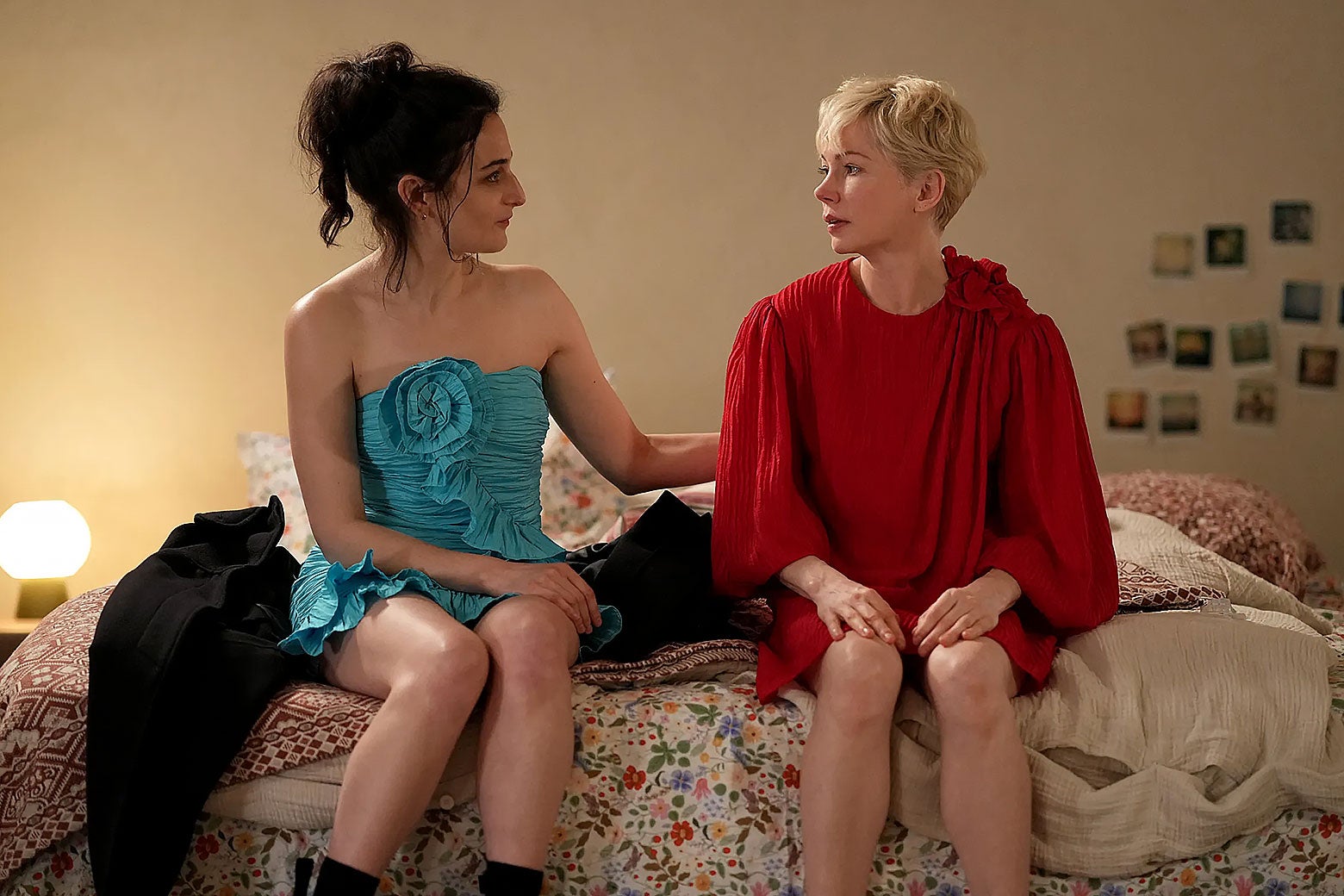
FX’s miniseries Dying for Sex was always going to be a tough sell—a cancer show? About a middle-aged woman, on a quest to come?—but if you could make yourself hit Play, you would see this project for the brave, hilarious thing that it was. Michelle Williams, as Molly, the cancer patient, and Jenny Slate, as her flibbertigibbet best friend, tap into deep reserves of the best kind of gallows humor. Excellent supporting actors like Sissy Spacek, as Molly’s difficult mom, and Esco Jouléy, as her game-for-anything palliative care specialist, give these two something to bounce off. The hospital makeout scene from the penultimate episode, in which Molly and her lover Neighbor Guy (Rob Delaney) finally figure out how Molly can orgasm with another person, is exquisitely awkward, tender, and beautiful. Molly wins: She makes her deathbed into a sexbed. The show issues a challenge: Deal with it. And you do! —R.O.
Streaming on Hulu.
Long Story Short
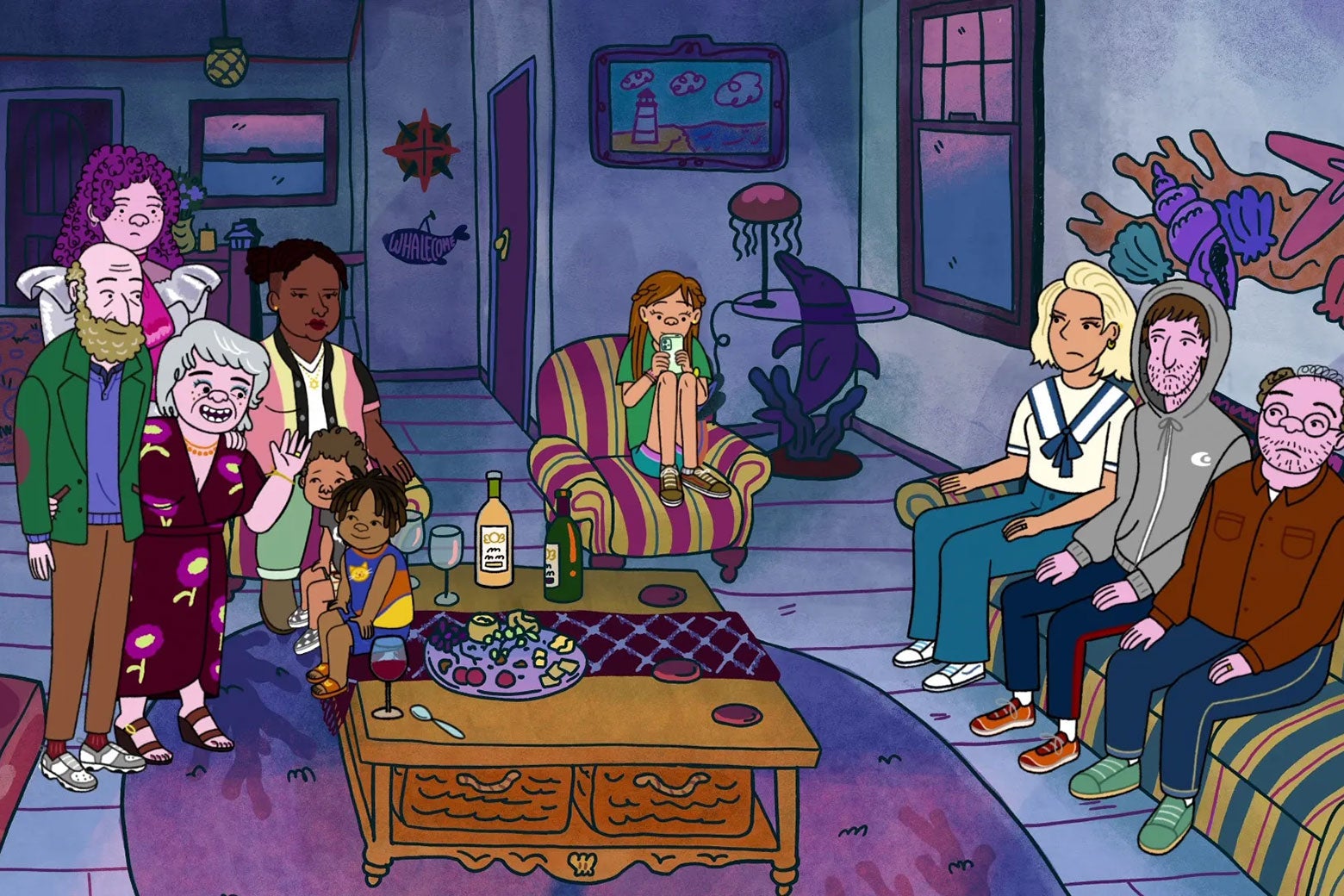
Yes, Long Story Short is animated, and yes, it comes from Raphael Bob-Waksberg and Lisa Hanawalt, the writer and artist, respectively, behind BoJack Horseman, but it has as much in common with All in the Family as it does The Simpsons. By injecting the family sitcom with BoJack’s antic screwball rhythms and folding in occasional doses of its surrealism, Bob-Waksberg & Co. have both reinvented the genre and produced the funniest and most moving show of the year. The show’s boldest gambit is how it approaches time: Every episode skips around and, as the season unfurls, tends to focus on one of its major characters, weaving them in and out of stories you’ve seen before. What could have been a gimmick instead adds an increased profundity as the series progresses, while allowing the show to avoid the most dangerous trap of its genre: sentimentality.
Long Story Short’s second-boldest gambit is that its characters are Jews. I know what you’re thinking: Ah, yes. Finally. A show about Jews. But these are not Seinfeld Jews, disguised behind last names like Benes or Costanza, nor the hiding-in-plain-sight Jews of Norman Lear. These are Jews who grew up with, as one character puts it, “a progressive egalitarian Conservative Judaism with an emphasis on ritual and community over faith and blind practice.” (Believe it or not, that’s a laugh line in context.) Much has been written—and will continue to be—about Long Story Short’s Jewishness, the ways it unabashedly peppers the dialogue with Yiddish, or throws its audience into the social and religious world of liberal Bay Area Judaism in the 21st century with very little explanation or apology. But in telling the story of the Schwooper clan, Long Story Short burrows so deep into the specific that it opens up into the universal. Here is all of life: parenthood, death, love both young and old, shame, self-discovery, queerness, divorce, religion, family, time, and a school that’s been infested by wolves. —Isaac Butler
Streaming on Netflix.
The Chair Company
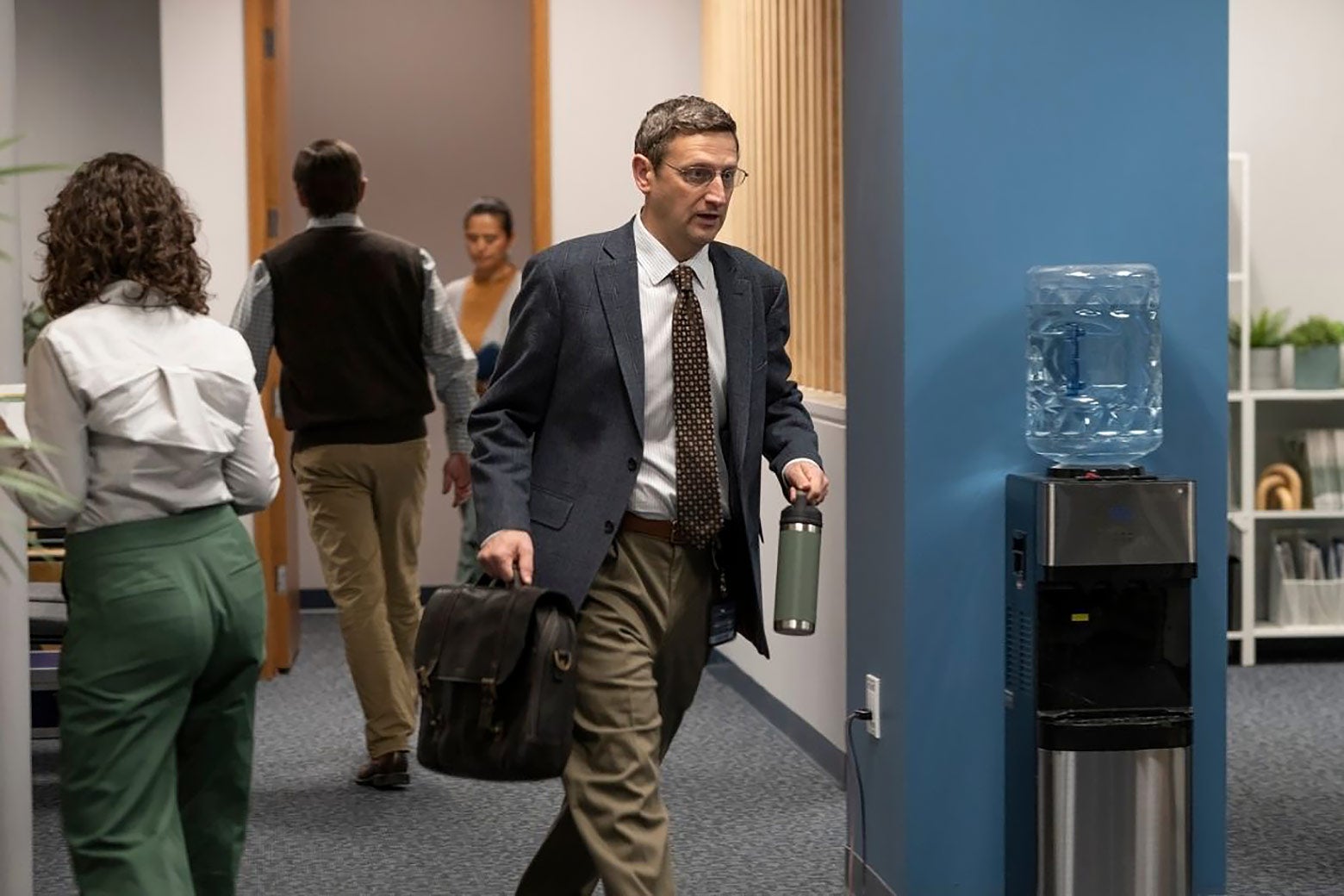
Tim Robinson’s first narrative series is longer and more exasperating than anything he’s ever done, and all the better for it. As a suburban man with a beautiful wife, two well-adjusted kids, and a steady office job, Robinson’s Ron Trosper would seem to have achieved a previous generation’s idea of the American dream. The problem is that Ron wants the modern version, the one where your successful startup marks you as a business visionary, or at least you don’t fall on your ass in front of the entire company and lose whatever shred of self-worth you thought you had. Ron becomes convinced that “the chair incident,” as he calls it, can only be the work of some elaborate, Parallax View–style conspiracy, and the genius of the show is it bears that resentful notion out, except that the conspiracy is both wider and weirder than even Ron suspects. After seeming to wrap things up in its penultimate episode, the show takes a wild swerve in the finale, confirming that the early hints of David Lynch were no accident, and that Ron’s foes might be supernatural as well as sinister. There’s no telling where the show will go in its already-announced second season, and that’s the best thing about it. —S.A.
Streaming on HBO Max.
The Lowdown
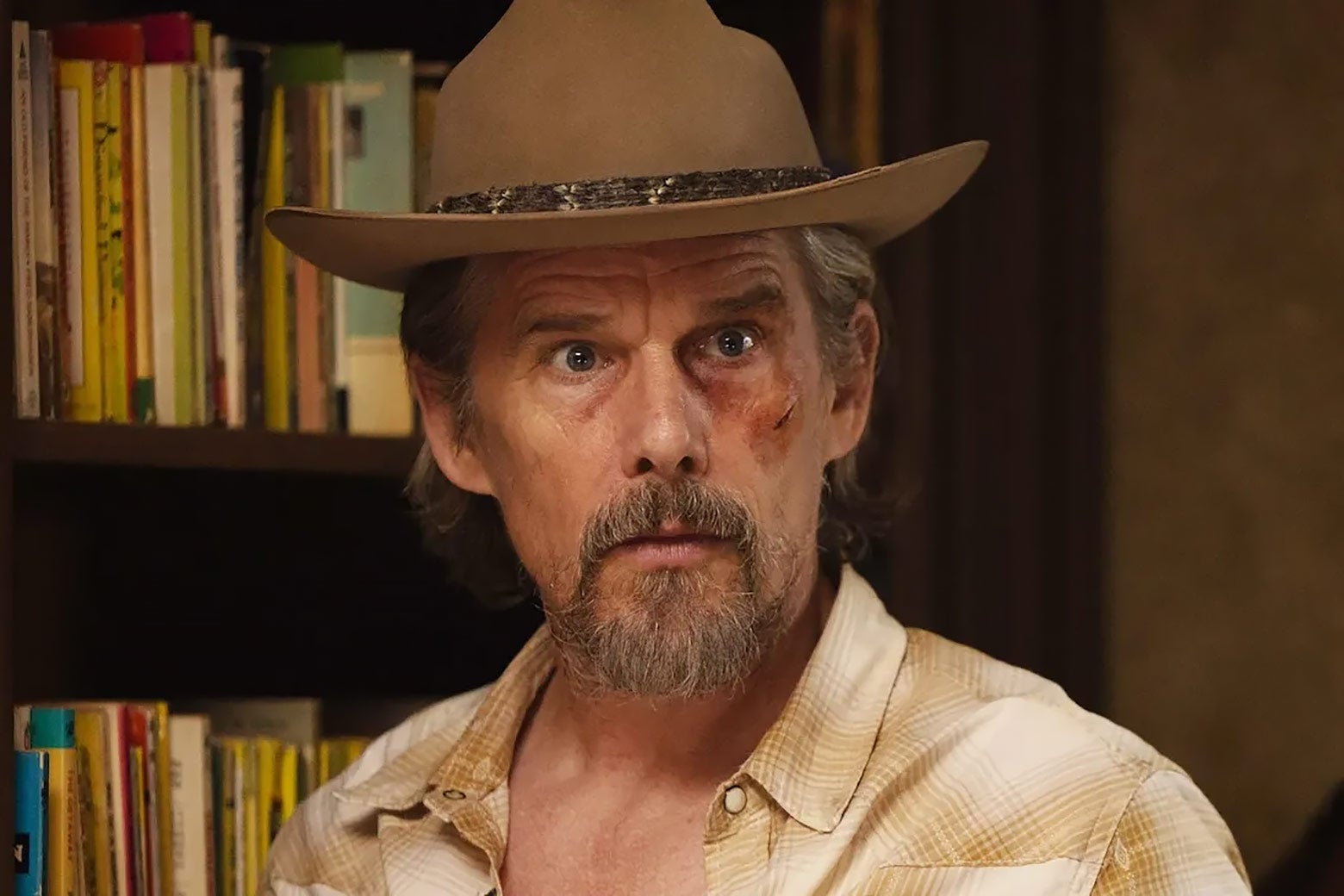
Sterlin Harjo’s follow-up to Reservation Dogs is The Lowdown, a Tulsa “noir” that sometimes feels serious but is never too heavy. A beautifully battered-looking Ethan Hawke plays Lee Raybon, an always-vaping, always-broke bookstore owner who does what you might call investigative reporting, but would not call himself a journalist—that’s too much of an identity, too many rules. Instead, Lee self-describes as a “truthstorian,” and under that banner, he drives around Tulsa in his beat-up white van, having gotten the idea that the death of a man from a local elite political family was something other than a suicide. You see a lot of Tulsa in this way, from diners to houseboats to the fancy homes of the wealthy, and you come to love it. And the relationship between Lee and his teenage daughter (played by Ryan Kiera Armstrong) adds sweetness and depth to the story, tempering Lee’s mania just when it needs it. —R.O.
Streaming on Hulu.
Severance
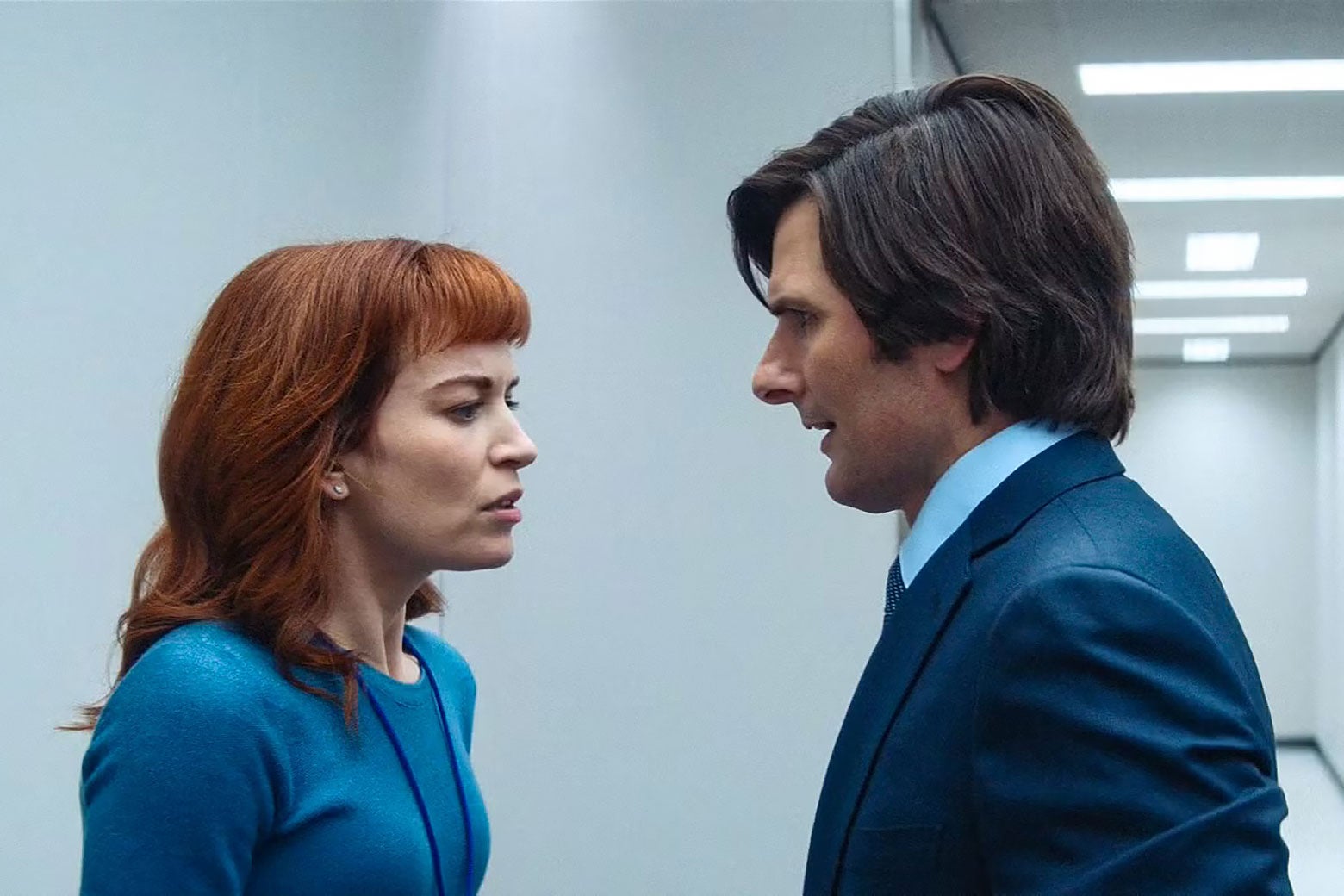
After three long years, Severance finally returned to our screens. I’m happy to declare that the wait was worth it. The second season of Dan Erickson’s dystopian workplace thriller stretches beyond the scope of the first, further building out the cold and strange world of Lumon Industries, both inside and outside the office. Although the series may have started out as a commentary about the dull static of work and corporate overlords’ subjugation and exploitation of labor, it is now grappling with even headier issues of personhood in its exploration of the inner and outer lives of its “severed” workers. This thorny moral quandary at the heart of the season is burnished by killer performances, stunning cinematography, a standout departure episode, and a blood-pumping season finale. There are still plenty of unsolved puzzles remaining—a mystery box is gonna mystery box!—but this season left me excited and intrigued, rather than frustrated by how many loose ends the show has yet to start tying up. As long as they keep making TV this good, I’ll keep watching, no matter how many lingering question marks accrue. —J.G.Z.
Streaming on Apple TV.
Honorable Mentions
Platonic: As far as I’m concerned, the best Seth Rogen show on Apple TV is Platonic, a comedy about two longtime friends in Los Angeles who reunite in middle age. Rogen plays divorcé Will, and Rose Byrne plays mother of three Sylvia, and yes, things are genuinely platonic between them. The second season is all about regression, undoing and complicating some of the growth Will and Sylvia showed in the first. Once again, the two fight, make up, fight some more, and get into various scrapes, and all of it is so fun and laugh-out-loud funny and warm that I honestly don’t understand why people aren’t talking about it all the time. —Heather Schwedel
Streaming on Apple TV.
The Diplomat: I’ll be honest. When I wrote a piece arguing that Keri Russell’s show—newly returned for a third season—was deliriously enjoyable trash, I expected a little pushback. Instead, I found that fans of the show are already very much on board with the idea, savoring its audacious twists and random romantic entanglements while relieving themselves of the burden of wondering whether anything makes sense. A midseason course correction was the series’ roughest bump so far, but when you’ve got Russell and Allison Janney staring icicles at each other, who cares? —S.A.
Streaming on Netflix.
Pluribus: It’s been a long time since a prestige TV drama seriously needled its audience’s complacency, but this new Vince Gilligan offering, starring a magnificently surly Rhea Seehorn, does that in spades, asking: What if the apocalypse arrived and gave us everything we say we want? What if the problem isn’t other people and the systems they’ve created, but our own perverse attachment to our unhappy loneliness? So far, the series’ creators have defied the obvious plot problems with this scenario—most stories are powered by conflict and dissatisfaction, after all—with great aplomb. This is the rare example of dystopian (or is it utopian?) TV that prompts truly searching self-reflection. —Laura Miller
Streaming on Apple TV.
Gen V: Where Prime Video’s The Boys satirizes contemporary woes through its depiction of a twisted society run by superpowered human beings, its spin-off Gen V focuses on those powers as metaphors for the ailments of today’s youth, from self-harm to eating disorders. Its second season shows even more depth than the first, extrapolating these teen issues into a larger conversation about how the youth are unfairly saddled with fixing corrupt societies. —N.G.
Streaming on Prime Video.
Task: This spiritual successor to Mare of Easttown, a crime drama also set in Pennsylvania, captures the same sense of melancholy, its verdant foliage bending under the weight of impossible choices and bad decisions. Watching Task feels like pressing on a bruise, the ache almost painful enough to make you want to stop, if it weren’t a reminder that you’re still alive. —J.G.Z.
Streaming on HBO Max.